What Mattress Complaints Tell Us About the Industry
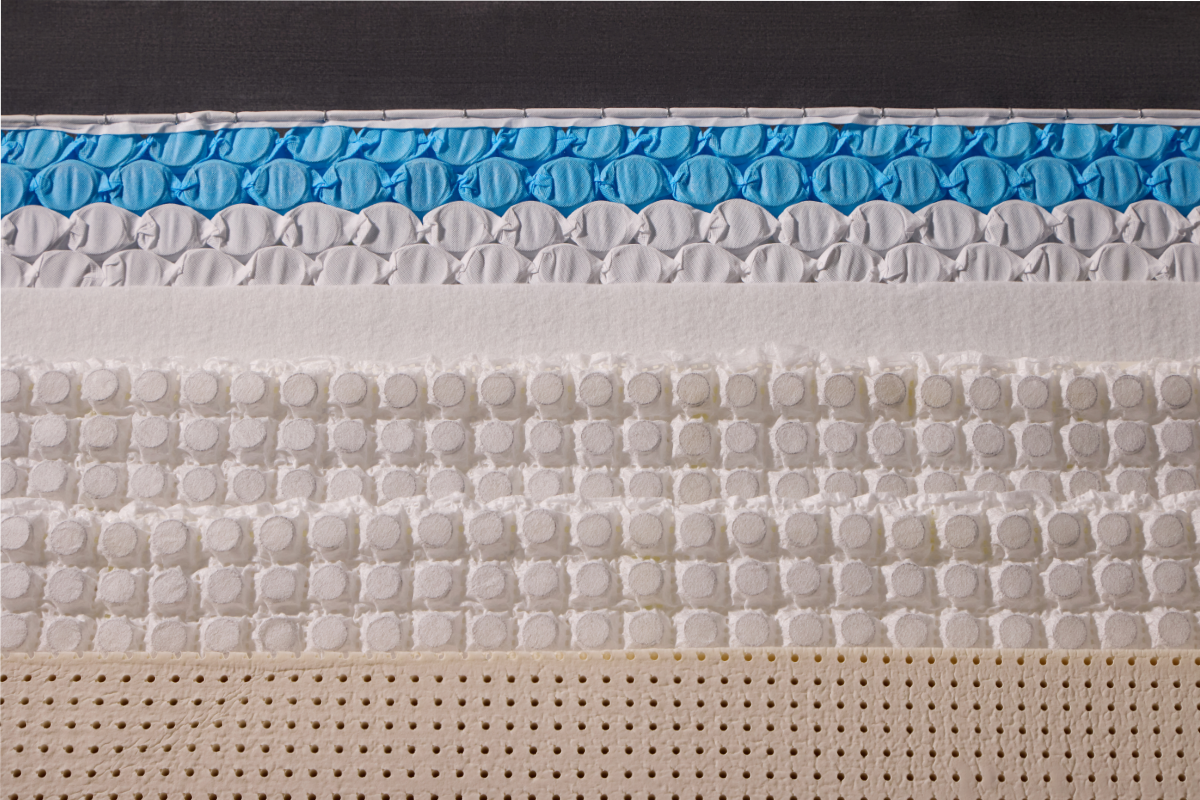
I have been pulling apart old mattresses in my Marrickville workshop since 2011. I see the same issues every week, and honestly, the data confirms what I have suspected for a long time. The way the industry is set up just doesn't work for the way people actually use their beds.
The raw numbers
Looking at the data from the scraper, the breakdown of complaints across the major brands is pretty telling:
- 32.0% Customer service/warranty (537 mentions)
- 30.8% Too firm (517 mentions)
- 23.4% Back pain (392 mentions)
- 19.2% Product different from advertised (322 mentions)
- 18.7% Return process issues (313 mentions)
- 17.9% Delivery/shipping issues (300 mentions)
- 16.4% Sleep quality declined (275 mentions)
- 15.4% Durability/longevity (258 mentions)
- 15.2% Value for money (255 mentions)
- 13.2% Sagging/indentation (221 mentions)
The biggest frustration for Australians isn't just the bed itself – it is the way companies handle things when something goes wrong. Over 32% of people are upset about customer service and warranty disputes.
Then you have the physical problems. "too firm" is sitting at nearly 31%, and "back pain" hits 23%. People buy a sealed mattress based on an online quiz or a five-minute lie-down in a showroom. They get it home, sleep on it for a month, and realise their shoulder isn't sinking in enough, or their hips are sinking too far because the cheap polyfoam is already failing.
When this happens with a standard mattress, you are out of luck. I always compare standard mattresses to a car with welded-on tyres. When the tread wears out, you have to throw away the whole car. If the top layer of foam goes soft but the steel springs underneath are still perfectly fine, you have to chuck the whole bed into the landfill. It is wasteful and illogical.
The value trap
So why is "value for money" such a massive issue in these reviews? When you spend $2,000 on a mattress, you expect it to last longer than a pair of sneakers. The data shows that people feel ripped off because the high-end marketing does not match the cheap materials inside the cover.
One customer paid $2,500 for a mattress that developed crater-like sagging within only six months. Another spent over $2,000 only to have the bed develop recurring lumps shortly after purchase. People feel like they are paying for a premium experience but receiving a basic piece of foam that is overpriced for its quality. In some cases, customers even noted that an Ikea mattress at half the price had better build quality than the "luxury" bed-in-a-box they bought. You are essentially paying a massive markup for clever social media ads and "free" delivery, rather than high-density support materials.
Broken beds
Durability and sagging are where the industry really falls down. Polyurethane foam – the stuff inside most boxed mattresses – is basically a bunch of plastic bubbles. Over time, those bubbles pop, and the foam loses its ability to push back.
I found reviews where mattresses became "unusable after 18 months" due to severe sagging. Some customers reported that their beds lost all support in as little as six months, causing severe back pain. One reviewer mentioned that despite regular monthly rotations, their mattress developed deep body-shaped indentations on both sides within a single year. This isn't just a minor annoyance; it is a structural failure that leaves people with no choice but to throw the whole mattress away and start again.
The comfort gamble
The data shows that 30.8% of people find their new mattress "too firm". This happens because you are buying a sealed rectangle based on a five-minute decision. People describe sleeping on these beds like "sleeping on a park bench" or a "concrete floor". Even when companies send out free toppers to "fix" the problem, many customers find they still cannot get comfortable and end up with worsening lower back conditions.
On the flip side, some people order a "firm" mattress only to have it feel uncomfortably soft with a "dramatic sinking" feeling. Because the bed is glued shut, there is no way to adjust the feel once it's in your room. You are stuck in a loop of returns and replacements.
The warranty wall
There is a huge amount of confusion about what a mattress warranty actually covers. Most brands offer a 10-year warranty, but this is not often a genuine promise of longevity. A warranty is there to cover major manufacturing defects or significant and unreasonable wear. It does not cover the fact that polyfoam naturally softens over time – and it does.
The real problem is the way brands handle this. I read one review where a customer’s mattress started collapsing after four and a half years, causing severe back and hip pain. The company refused the claim because the physical dip was less than 30mm deep. Even though the foam had lost all its density and support, it didn't meet the "technical" definition of a failure.
Not a perfect record
I want to add a massive caveat here. Ausbeds is definitely not flawless, and not all our reviews are great either. Over the years, we have had our share of unhappy customers, including shipping mishaps and people who just could not get comfortable on our beds.
The difference is what we actually do with that feedback. We listen to our customers, and we use those complaints to iterate on our design and manufacturing process. In fact, our current modular system was built specifically to solve a massive chunk of the problems that we used to have in our early days. We realised that trying to guess the "perfect" firmness for a stranger over the internet was a fool's errand. So, we stopped trying to build one magic bed and started building a system that can be adjusted.
The modular fix
The reason we switched to using natural latex in all our models is simple: durability. Polyfoam wears out and softens, which is why some people see their sleep quality decline shortly after purchase. Natural latex is a resilient material that holds its shape for much longer.
Our mattresses aren't glued shut. They have a high-quality zippered cover that lets you get inside the bed. This solves the "too firm" or "too soft" problem without needing a messy return process. If the bed doesn't feel right during your 7-month trial, we give you up to two free component swaps to get the feel exactly right.
If your back needs more support but your partner wants a plush feel, we can split the internal comfort layers down the middle. We use bodyweight-matched honeycomb pocket springs, and if your needs change in five years, you can just swap out a single layer instead of throwing a $2,000 mattress into a landfill.
By making the bed modular, we can actually fix the problem for the customer rather than arguing about whether a dip is 25mm or 30mm deep.
The mattress industry is currently built on selling you a sealed box and hoping you don't complain. I think it makes more sense to buy a system that can be adjusted and repaired. It is better for your back, better for your wallet, and a lot better for the environment.
About the author

Karl is the owner of Ausbeds. He started the company after realising how many people were frustrated by mattresses that failed too soon and too often. So he built a workshop in Sydney and began making mattresses the way they should be made - with transparent materials, adjustable designs, and customer-first thinking. When he's not in the showroom/workshop, he's on Reddit, Whirlpool, and OzBargain, cutting through industry fluff with honest mattress advice.