Is your mattress causing shoulder pain? Here's the fix
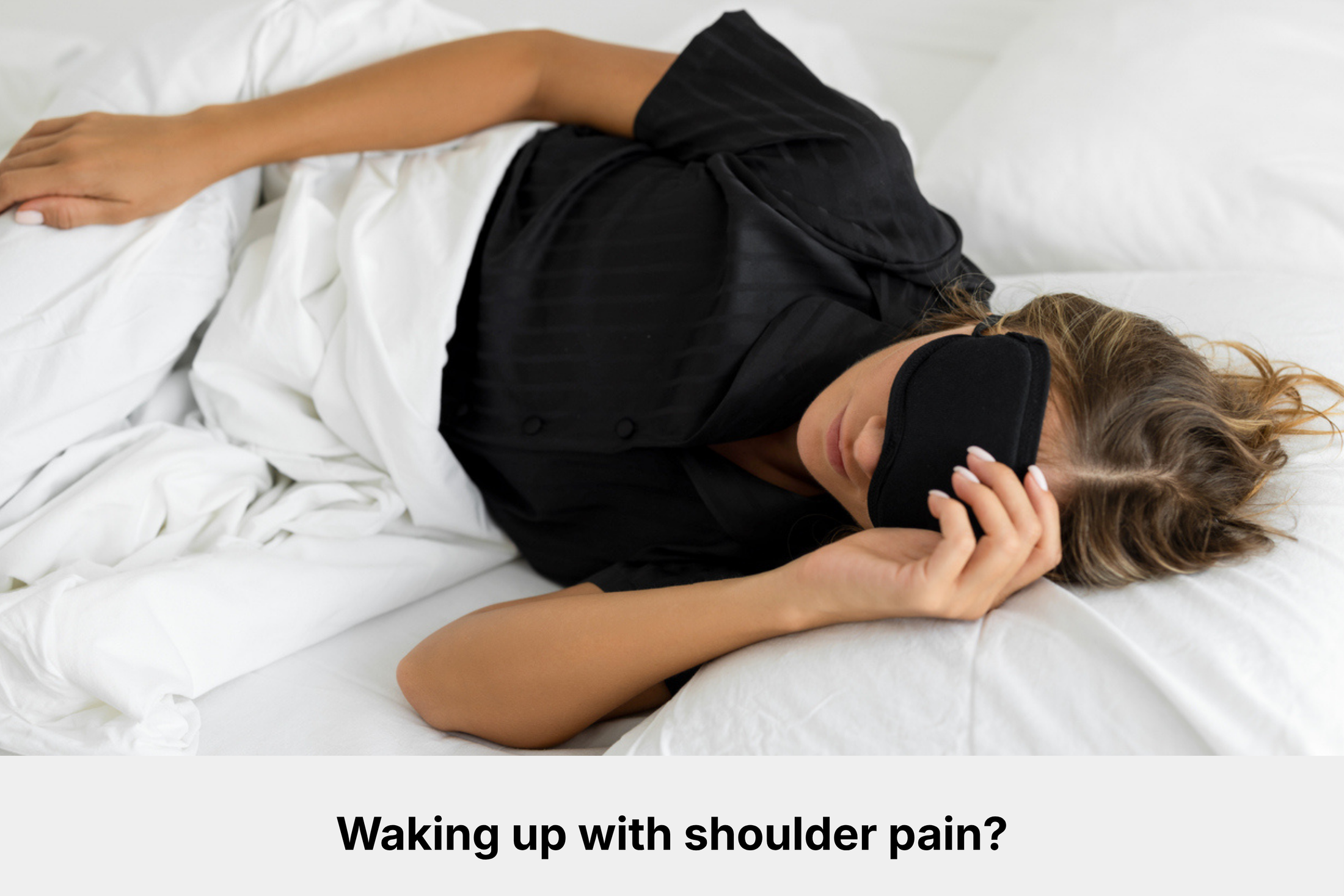
A mattress is a pressure distribution device. Its job is to move pressure away from your hips and shoulders and onto your torso, so your spine holds its natural curve. When it fails at that job, your shoulders cop the worst of it – especially if you're sleeping on your side.
Why your mattress might be causing shoulder pain
Side sleepers concentrate most of their weight onto two narrow contact points: the shoulder and hip. When you sleep on your side, your rotator cuff and the surrounding muscles are pressed between your body weight and the mattress surface. That's a lot of force on a very small area, and the shoulder joint isn't built for it. Unlike the hip, which is a deep ball-and-socket joint, the shoulder is held together mostly by muscles and ligaments. It's not designed for load-bearing weight all night.
Here's where your mattress issues start. If it's too firm, it pushes back against your shoulder instead of letting it sink in. If it's too soft, your shoulder sinks too far, and you're not getting proper spinal alignment. Either way, you wake up sore.
Best sleeping position for shoulder pain
To relieve shoulder pain, here's what I'd suggest:
-
Avoid direct pressure on the affected shoulder. Switch to your opposite side or your back. If your left side is the problem, sleep on the right – and vice versa.
-
Use a supportive pillow that fills the gap between your shoulder and head. If you're sleeping on your side on a properly fitted mattress, you need a thicker pillow to keep your neck aligned with your spine. The right pillow makes a bigger difference than most people think.
-
Try a body pillow behind your back to stop yourself rolling onto the sore shoulder during the night.
-
If you sleep on your back, a pillow under your knees can help keep your spine in a neutral position and relieve pressure through the neck and shoulders.
Side sleeping does have benefits – it can reduce snoring and help with acid reflux – so I'm not telling anyone to stop. You just need the right mattress and a supportive pillow to make it work without wrecking your shoulders.
What to look for in a mattress if you have shoulder pain
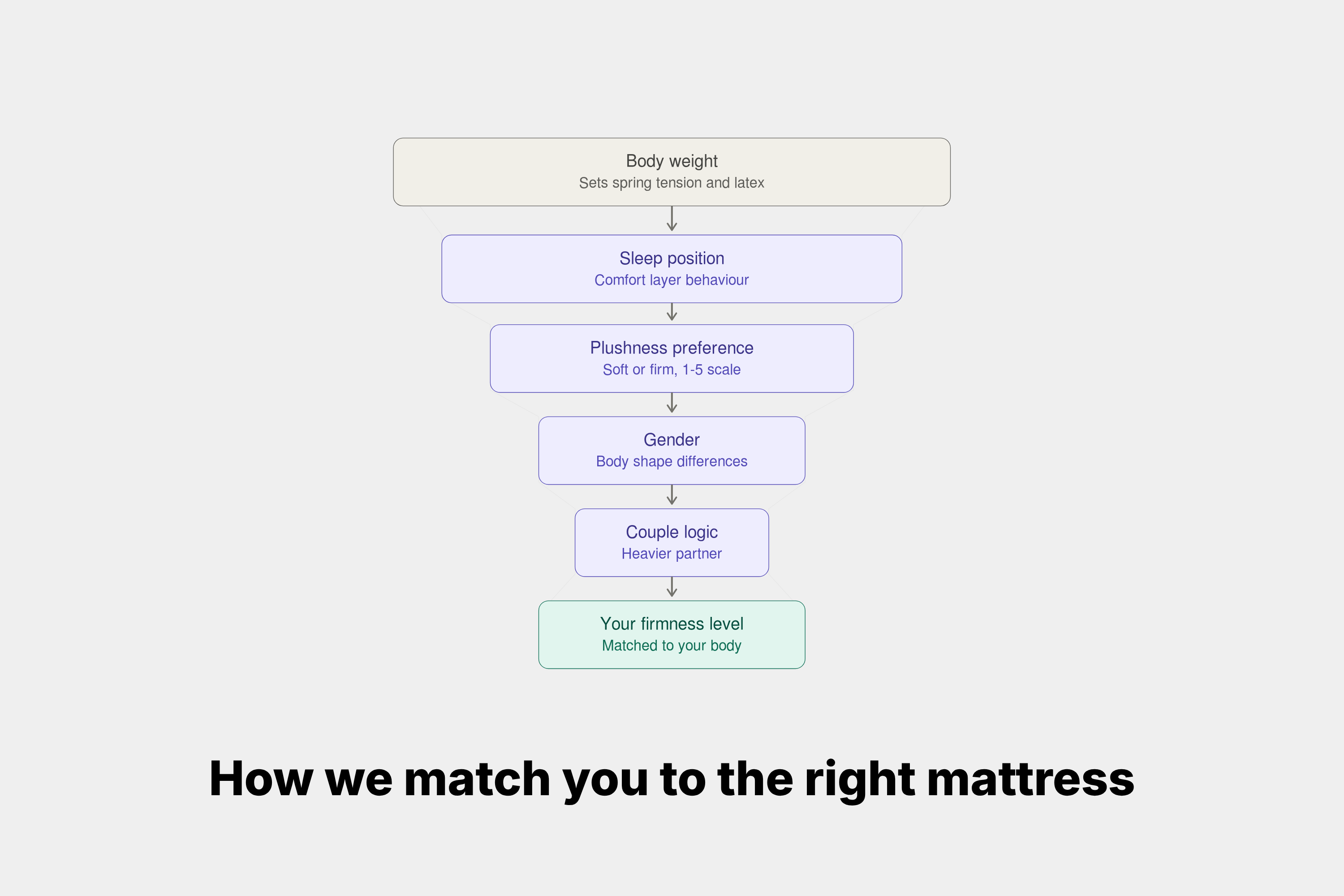
The right spring tension
Avoid vague labels like "medium firm mattress". You need to look at materials and how your weight and sleep preference match the mattress you will be sleeping on.
This is the core of my focus when building a mattress. Spring tension matched to how much you weigh is everything. If your springs are too firm for you, your body can't sink in properly. If they're too soft, you hammock and your spine curves out of alignment – causing back pain, neck pain, and pressure points at the hips and shoulders.
Higher body weight means more force at the pressure points. That means you need thicker gauge springs, plus additional comfort layers on top to spread the load and relieve pressure.
Comfort layer
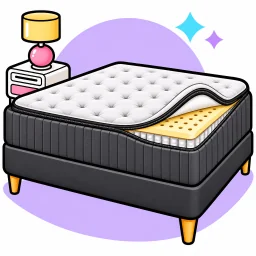
Once the springs are right, the comfort layers need to let your shoulders and hips sink in without the rest of the mattress caving. I've spent years testing different approaches, and what I've landed on at Ausbeds is a combination of natural latex and micro-springs.
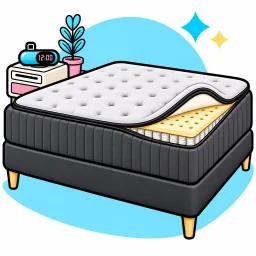
The setup on our Cloud mattress, which offers the deepest pressure relief, is: 5cm of soft natural latex on top, then two layers of micro-springs (3,200 on a queen), then the pocket springs matched to your weight underneath. The latex moulds down into the micro-springs, so the shoulders and hips sink right in. The micro-springs move independently, so each pressure point gets its own response – your shoulder sinks while your torso stays supported.
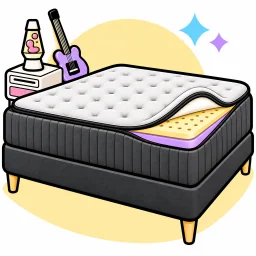
The Aurora uses the same two layers of micro-springs with medium latex instead of soft. It's got slightly less sink and more of a balanced feel. Side sleepers, who sometimes sleep on their backs, tend to prefer the balanced feel. One Aurora customer, Dan, left this review: "I have never looked back, within days my neck and shoulder pain was gone and my neck pain is gone (side sleeper)."
Other factors that affect shoulder pain at night
A new mattress can significantly improve sleep quality and reduce pain, but it's not the only thing worth addressing. Getting these other factors right alongside the right mattress is what leads to genuinely better sleep.
-
Your pillow matters as much as your mattress. A supportive pillow that matches the depth created by your shoulder sinking into the mattress is non-negotiable for side sleepers. Too flat and your neck drops; too thick and your neck kinks the other way. Both cause neck pain and can worsen shoulder pain.
-
Gentle stretching before bed can reduce inflammation and loosen things up. Pendulum swings, cross-body stretches, and shoulder blade squeezes are all worth trying.
-
See a professional if your pain persists beyond 2–3 weeks of trying adjustments. Persistent shoulder pain can signal a rotator cuff injury or other conditions that need proper treatment – no mattress can fix a torn tendon.
Summary
I built Ausbeds to solve the problem of shoulder pain. I know what it feels like to wake up with morning shoulder pain because the mattress isn't doing its job. Every mattress starts with springs chosen for your weight, and, for side sleepers, the Cloud with its double layer of micro-springs is what I'd recommend. It's the model 69% of our customers choose, and it's the one I sleep on myself.
If you're in Sydney, come try them in our showroom. If you're interstate, call the showroom on 02 8999 3333 for advice.
People also ask
Can a bad mattress cause your shoulder to hurt?
Yes. If your mattress can't absorb your shoulder properly – either because it's too firm, too soft, or not matched to how much you weigh – it will concentrate pressure on the shoulder all night. Over time, that causes pain, stiffness, and can aggravate existing conditions like rotator cuff injuries or shoulder impingement. A mattress causing shoulder pain is one of the most common issues I see, and it's often the easiest to fix once you understand what's going wrong. Getting a new mattress with proper support can relieve shoulder pain surprisingly quickly.
What is the best mattress for improving shoulder pain?
The best mattress for shoulder pain is one where the springs are matched to your weight and the comfort layers provide genuine pressure relief at the shoulders and hips. In my experience, a hybrid mattress combining pocket springs, micro-springs, and natural latex works best for side sleepers. Memory foam can alleviate shoulder pain to a degree, but it tends to lose its responsiveness within a few years and doesn't offer the same level of targeted support. Most people default to looking for a medium firm mattress, but that label means nothing without choosing the springs for your body weight first. The best mattress is the one that hits the right balance between contouring and support for your specific build.
What are the main causes of shoulder pain at night?
The most common causes include sleeping on your side on a mattress that doesn't relieve pressure properly, existing conditions like rotator cuff injuries or shoulder impingement that worsen when muscles relax during sleep, and spinal misalignment from a mattress that doesn't suit you. Other factors play a role too – a poor sleep position, a pillow that's the wrong height for your neck, or simply spending too long on one side without moving. At night, with no distractions and reduced muscle tension, you also notice pain more than you would during the day. If you tend to sleep on your left side, try switching to the right (or to your back) to see if the pain follows the side you sleep on.
How to fix a bad shoulder after sleeping badly?
Start by switching to your opposite side or sleeping on your back to take direct pressure off the affected shoulder. Avoid sleeping on the painful side until it settles down. Use a thicker pillow if you're a side sleeper to keep your neck and spine aligned, and consider a body pillow to stop yourself rolling back. Apply gentle stretching in the morning to restore movement and alleviate pain – even a few minutes of pendulum swings can help.
If you're consistently waking up with pain, the real fix is usually a new mattress that's properly matched to you. That's what will give you better sleep and a good night's sleep long-term, rather than just managing the symptoms. A well-matched mattress with the right level of pressure relief should have you sleeping through the night without waking in pain. If nothing helps after a few weeks, see a physio – there may be something else going on that needs attention.
Is gel-infused memory foam good for a mattress?
Gel-infused memory foam is a marketing gimmick. The gel is supposed to draw heat away from the body, but in practice, it makes a marginal difference – the foam still traps heat regardless. If you're a side sleeper, the bigger issue with memory foam is that it loses its responsiveness over time. A hybrid mattress with pocketed coils and latex will sleep at a more comfortable temperature and provide better pressure relief for the shoulders than any memory foam mattresses will – including the gel-infused ones.
Should I get a hybrid mattress or an all-foam mattress for shoulder pain?
A hybrid mattress with pocket springs will almost always outperform an all-foam mattress for shoulder pain. The reason is simple: springs provide independent, targeted support that foam can't match. Each pocketed coil responds to the pressure above it, so your shoulder sinks while your torso stays up. All-foam mattresses (including memory foam mattresses) compress as a single unit – there's no independent response, so you don't get that perfect balance of sink and support. Hybrids also tend to have better motion isolation than innerspring coils and lower motion transfer overall, which means less disruption if you share a bed. There's no perfect mattress that suits everyone, but for side sleepers experiencing shoulder pain, a well-built hybrid is the closest thing.
Does zoned support help with shoulder pain?
I'm not sold on zones. The idea is that the mattress has softer zones at the shoulders and firmer zones at the hips, but it assumes everyone's body is built the same way. Women generally carry more weight in the hips and less in the shoulders; men tend to be the opposite. Any single zoning scheme is wrong for roughly half the population. What actually works better is consistent, high-quality point elasticity across the full mattress surface – where the springs respond to whatever pressure is above them rather than being pre-set for a body shape that might not be yours. That's how you get proper alignment without guessing.
What are the common conditions made worse by a bad mattress?
Your mattress may not be the original cause of a rotator cuff injury, shoulder impingement, frozen shoulder or shoulder bursitis – but it can absolutely make them worse. At night, muscle tension drops, and the shoulder becomes less stable. If your mattress isn't providing pressure relief where it matters, these conditions get aggravated during the hours when healing should be happening.
|
Condition |
What's happening |
How your mattress affects it |
|---|---|---|
|
Rotator cuff injury |
Tendons in the shoulder are strained or torn |
A firm mattress compresses the rotator cuff; too soft and the shoulder collapses inward |
|
Shoulder impingement |
Bone spurs or swelling pinch the tendons |
Lack of pressure relief keeps everything compressed all night |
|
Shoulder bursitis |
Inflamed fluid sac around the shoulder |
Direct pressure on the shoulder blades increases inflammation |
|
Frozen shoulder |
Scar tissue limits movement |
Poor support holds the neck and shoulder in an unnatural position for hours |
If you're experiencing shoulder pain from any of these conditions, a mattress that lets your shoulder sink in properly can significantly improve how you feel in the morning. It won't cure the underlying problem, but it can stop your mattress from causing shoulder pain on top of what's already there.
About the author

Karl owns Ausbeds. Tired of mattresses that failed too soon, he set up a Sydney workshop to make them properly: honest materials, adjustable designs. He also gives straight mattress advice on Reddit, Whirlpool and OzBargain.