Are IKEA Mattresses Good? We Compare Their Hybrid Mattresses
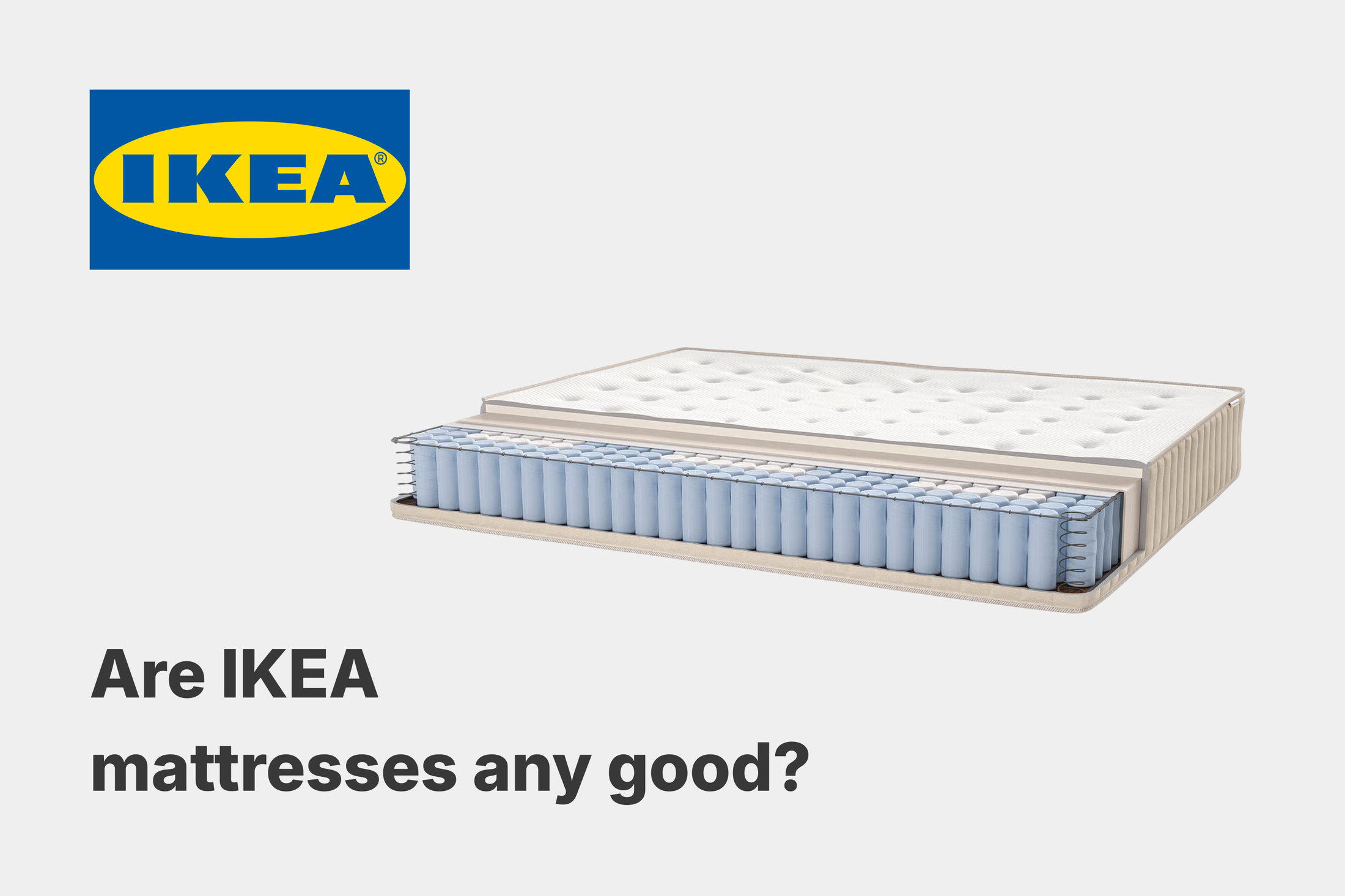
Maybe you typed "are IKEA mattresses good" into Google. Or maybe you're standing in an IKEA store right now, lying on a Vågstranda and wondering if $799 for a queen mattress is too good to be true.
Here's my honest take on IKEA's range – what's inside them, what they're good for, and where they fall short. I'll compare their pocket spring models to what we build at Ausbeds, so you can see what a difference materials and construction actually make.
What's inside IKEA mattresses
IKEA sells about a dozen mattress models in Australia, ranging from $199 foam slabs to $999 pocket spring models. They break down into two categories.
All-foam mattresses – The Åkrehamn is a block of polyurethane foam in a cover. Simple construction, low price. The problem with all-foam is heat – there's no airflow, so body heat gets trapped in the foam. Fine for a spare room or guest bed, but I wouldn't sleep on one every night.
Pocket spring mattresses – The Valevåg, Vågstranda, Vatneström, and Ånneland all use pocket springs with foam or latex comfort layers on top. This is where IKEA gets slightly better – pocket springs contour more than foam alone. The Vatneström uses latex, and the Ånneland adds mini pocket springs with memory foam on top. Just watch out for memory foam – it's dense, closed-cell, and traps body heat all night.
IKEA mattresses: a look at their hybrid mattress
Valevåg mattress review
Queen mattress price: ~$699 | Firmness: Firm / Extra firm | Height: 24cm
Entry-level pocket springs with a polyurethane comfort layer and quilted cover. Comes in Firm and Extra Firm. 24cm tall.
The polyurethane foam is 25 kg/m³ – that's low density, which means it'll compress faster than higher-density foam. The comfort layer is thin, which is actually fine for a firm mattress. Less foam, less heat, more direct feel.
The five "comfort zones" are a marketing feature. Zones assume everyone's body is the same shape – they're not. Worth ignoring.
Works well for back and stomach sleepers on a budget, or as a spare room mattress. Side sleepers will find it too firm – there's not enough cushioning for shoulders and hips.
IKEA bundles it with the Nordberget memory foam topper. Memory foam adds pressure relief, but traps heat. If you run warm at night, skip the topper.
Best for: Back and stomach sleepers under 70kg. Spare rooms. Budget-conscious buyers who don't need softness.
Vågstranda mattress review
Queen mattress price: ~$899 | Firmness: Firm / Extra firm | Height: 28cm
The Vågstranda uses IKEA's "S-core" system – two layers of pocket springs stacked on top of each other, with a foam comfort layer and quilted cover on top. They call it seven comfort zones and reinforced edges.
The dual spring idea isn't necessarily bad. The top layer contours, and the bottom provides support. But I'd be wary of spring count, and the foam sitting over it is the same thin, low-density polyurethane (25 kg/m³) you'll find across most of the IKEA range – and that's where it falls down.
NapLab's independent testing put this mattress in the bottom 4% of all mattresses tested. Poor cooling, edge support issues, and inadequate pressure relief. At this price point, that's not surprising – but it's worth knowing before you buy.
Best for: Stomach sleepers. Anyone who wants firm and doesn't mind sacrificing pressure relief to get it.
Ånneland mattress review – best for side sleepers
Queen mattress price: ~$999 | Firmness: Firm | Height: 24cm
The Ånneland is IKEA's proper hybrid – pocket springs with multiple foam layers on top. The full stack: high-density foam, a memory foam layer, zoned support foam across 5 comfort zones, mini pocket springs, reinforced edges, and a removable washable cover.
The memory foam is what sets this apart from the rest of the IKEA range. Your shoulders and hips sink in, pressure distributes better, and side sleepers generally find this more comfortable than IKEA's firmer options.
Two real trade-offs worth knowing:
Heat. Three foam layers plus memory foam plus a foam border for edge support means this mattress stores a lot of body heat. Memory foam is the worst offender of all foam types – it traps heat rather than dissipating it. The foam border also seals the perimeter, blocking the airflow that would normally escape around the edges. If you run hot, this will make it worse.
Durability. Memory foam compresses permanently over time. Unlike latex (which holds its shape for decades) or springs (which don't really wear out), memory foam develops body impressions. At $999, the foam quality is unlikely to be high-density, which means it'll soften faster than you'd want.
The washable cover is a genuine plus at this price point.
Best for: Side sleepers wanting pressure relief on a budget. Avoid if: You sleep hot, or you're a stomach sleeper needing firm resistance.
Vatneström mattress review
Queen mattress price: ~$1,399 | Firmness: Firm / Extra firm | Height: 26cm
The Vatneström is IKEA's most expensive mattress – and the only one where they've used natural materials. Latex foam, wool wadding, cotton, linen, and a coir/natural latex protection pad over a pocket spring unit with 218 springs per square metre, 5 comfort zones, and reinforced edges.
It's a step in the right direction. Latex handles pressure relief better than memory foam and sleeps cooler (though they don't specify the thickness). Wool helps with temperature regulation. These are materials worth considering.
218 pocket springs per square metre is standard, but below what good mattress makers use (for reference, Ausbeds uses around 324 per square metre in a honeycomb layout). Fewer springs means less contouring and less point elasticity.
Value question. At $1,399, there are other competitors worth exploring in this range, like the Ecosa Pure or Eva Premium Adapt that allow you some adjustability.
Best for: Anyone buying from IKEA who wants the best option. Natural material seekers on a budget. Avoid if: You want adjustability or a mattress that can be fine-tuned after purchase. It's a sealed box. You will have to chuck it in 5-10 years when it starts to wear out.
IKEA mattresses vs Ausbeds: comparison table
| Valevåg | Vågstranda | Ånneland | Vatneström | Ausbeds Aurora | Ausbeds Cloud | |
|---|---|---|---|---|---|---|
| Queen price | ~$699 | ~$899 | ~$999 | ~$1,399 | $2,450 | $2,950 |
| Springs | 249/m² | 498/m² (2 layers of 249/m²) – Dual S-core | 180/m² – Mini springs | 218/m² | 324/m² – 986 in honeycomb layout | 324/m² – 986 in honeycomb layout |
| Comfort material | Polyurethane 25 kg/m³ | Polyurethane 25 kg/m³ | Memory foam + HR foam | Latex + wool + coir | 5cm GOLS natural latex, 1 micro spring layer | 5cm GOLS natural latex, 2 micro spring layers |
| Firmness options | Fixed: Firm | Fixed: Extra firm | Fixed: Firm | Fixed: Extra firm | Medium or firm springs matched to latex choice and body weight | Medium or firm springs matched to latex choice and body weight |
| Edge support | Firmer perimeter springs | Firmer perimeter springs | Foam reinforced edges | Reinforced edges | Firmer perimeter springs | Firmer perimeter springs |
| Adjustable | No | No | No | No | Yes (springs, microsprings + latex) | Yes (springs, microsprings + latex) |
| Trial period | 365 days (exchange only) | 365 days (exchange only) | 365 days (exchange only) | 365 days (exchange only) | 7 months (swap or refund) | 7 months (swap or refund) |
| Warranty | 10 years | 10 years | 10 years | 10 years | 10 years | 10 years |
| Temperature | Below average | Below average | Poor (memory foam + foam edges) | Good (latex, wool + springs) | Good (latex + springs) | Good (latex + springs) |
IKEA mattress guarantees and the 365-day exchange policy
All IKEA mattresses come with a 10-year guarantee covering manufacturing defects, not comfort deterioration or body impressions.
Their "Love it or Exchange it" policy gives you 365 days to exchange your mattress once. A few catches: it's exchange-only, not a refund. You get another IKEA mattress or store credit. The mattress needs to be clean and undamaged – tricky after months of use. And you need to get it back to an Ikea store, which, for a queen mattress, takes some planning.
At Ausbeds, our trial is 7 months with 2 free firmness swaps. If the firmness isn't right, we swap the spring unit or latex – not the whole mattress. You keep what's working and fix what isn't.
Why pocket springs matter
Individual pocket springs respond independently to pressure, contouring to your body and reducing motion transfer. Quality comes down to three things: spring count, layout, and tension matching.
Spring density. More springs per square metre means better point elasticity – the mattress wraps around you with less resistance. IKEA uses standard row layouts. Our queen has 986 pocket springs in a honeycomb pattern, which fits more springs into the same space. More springs, more precise body response.
Spring tension matching. This is the big one. IKEA mattresses come in firm or extra firm – two tensions for every body weight. At Ausbeds, we match spring tension to your latex choice and body weight before the mattress is built. A 60kg side sleeper and a 110kg stomach sleeper need completely different spring tensions for proper spinal alignment. One tension doesn't serve both.
A good mattress keeps your spine aligned without creating pressure points. Matching spring tension to the surface material and body weight is how you solve both problems at once.
The foam and heat problem
About half of IKEA's range uses thick foam stacks – polyurethane or memory foam. The Morgedal, Åbygda, and Åkrehamn are all foam mattresses. Even their spring models layer foam on top.
Foam is closed-cell. Air can't circulate through it. Memory foam is worse; it needs your body heat to soften, then holds it. The more foam stacked above the springs, the more heat is trapped overnight.
Natural latex is different. It has an open-cell structure with pinholes throughout, so air moves through it rather than getting trapped. Combined with pocket springs – which are essentially columns of air – you get a surface that dissipates heat instead of storing it.
Who should buy a mattress from IKEA?
Spare room or guest bed. The Valevåg or Vågstranda for under $900 makes sense for occasional use. Low price, decent quality, job done.
Temporary solution. You can walk in and walk out the same day. Most models are roll-packed and fit in a car. Fine if you need something tonight.
Kids. Younger kids don't need premium – a basic mattress does the job until they grow bigger.
Who should look elsewhere?
Anyone over 80kg. IKEA's firmness options are limited, and low-density foam compresses faster under heavier body weight. Pocket springs matched to the latex choice and body weight make a meaningful difference.
Side sleepers. Thin comfort layers don't let shoulders and hips sink in enough. Side sleepers need genuine pressure relief – a quality comfort layer over responsive springs.
Hot sleepers. Most IKEA foam models trap heat. The Vatneström is their only option worth considering for temperature regulation, but it's the exception.
Anyone wanting 10+ years. Low-density foam and no adjustability mean most IKEA mattresses need replacing every 3-8 years. Higher-density materials with a modular design last significantly longer.
Replacing your old mattress
If your Hovag, Hamarvik, or Malfors has developed body impressions, don't buy another budget model. Sagging means the foam has compressed, and springs have lost tension. The same price point gives the same result in the same timeframe.
A mattress for daily use should last 10 years minimum. If yours failed in under 5 years, the likely culprits are low foam density – once the top wears out, there's nowhere to go.
If you're ready to upgrade
If you've outgrown the budget mattress and want something that lasts, here's what matters: natural latex as the comfort layer, pocket springs matched to your body weight, and the ability to adjust firmness after purchase.
We make the Aurora and Cloud in Sydney. Both use honeycomb pocket springs and natural latex; the difference is whether the mattress has one or two micro spring layers. Springs are matched to your latex choice and body weight, and the firmness can be adjusted at home or with firmness swaps during the 7-month trial.
The Aurora starts at $2,450 queen and the Cloud at $2,950 queen.
Everything's made and built to last in our Sydney factory. Visit us at 136 Victoria Road, Marrickville. Open seven days. Call (02) 8999 3333.
This comparison is based on information published by the brands themselves and other publicly available sources. Specs, prices and policies can change, so if you spot anything that looks wrong or out of date, let us know and we’ll check it.
People also ask
About the author

Karl is the owner of Ausbeds. He started the company after realising how many people were frustrated by mattresses that failed too soon and too often. So he built a workshop in Sydney and began making mattresses the way they should be made - with transparent materials, adjustable designs, and customer-first thinking. When he's not in the showroom/workshop, he's on Reddit, Whirlpool, and OzBargain, cutting through industry fluff with honest mattress advice.