


Best Mattress for Side Sleepers in Australia
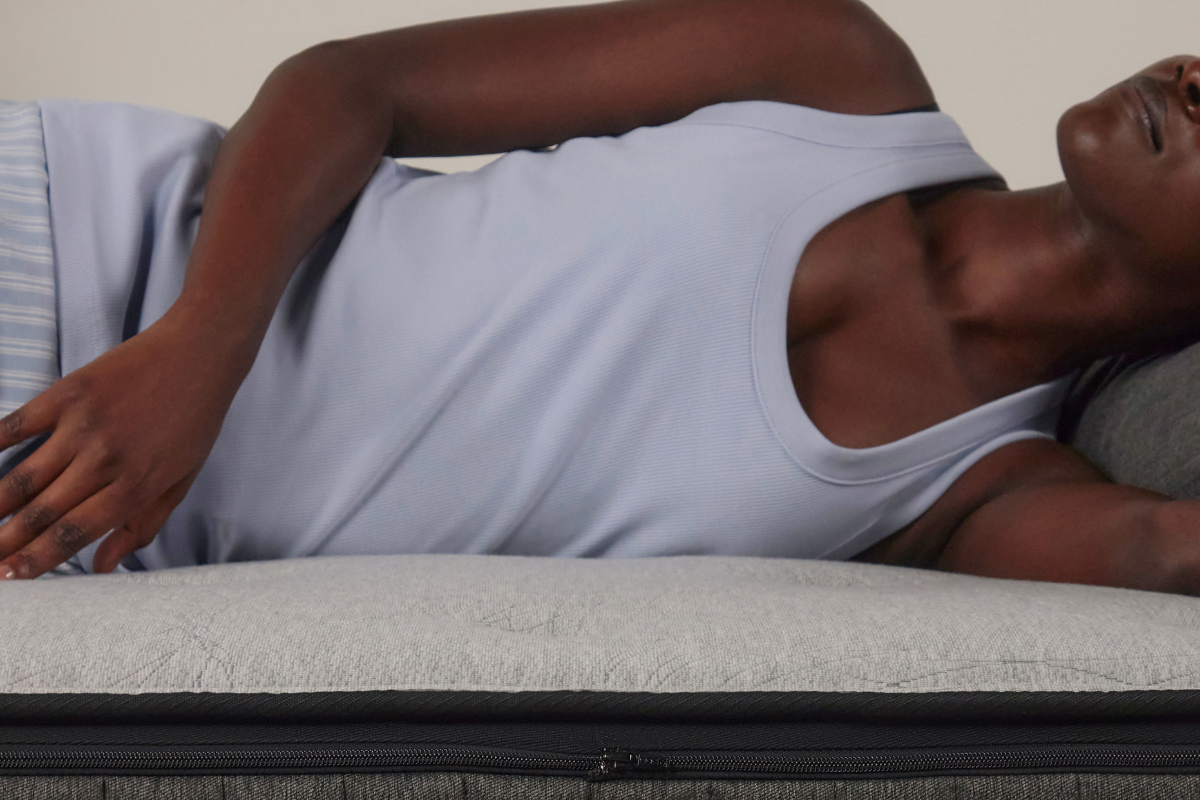
Side sleepers: Ever feel like you're lying on top of your mattress instead of in it? That's the marshmallow problem. Your body pushes through the comfort layers and lands on springs that are too firm. The solution isn't more foam – it's often about matching the springs to your weight.
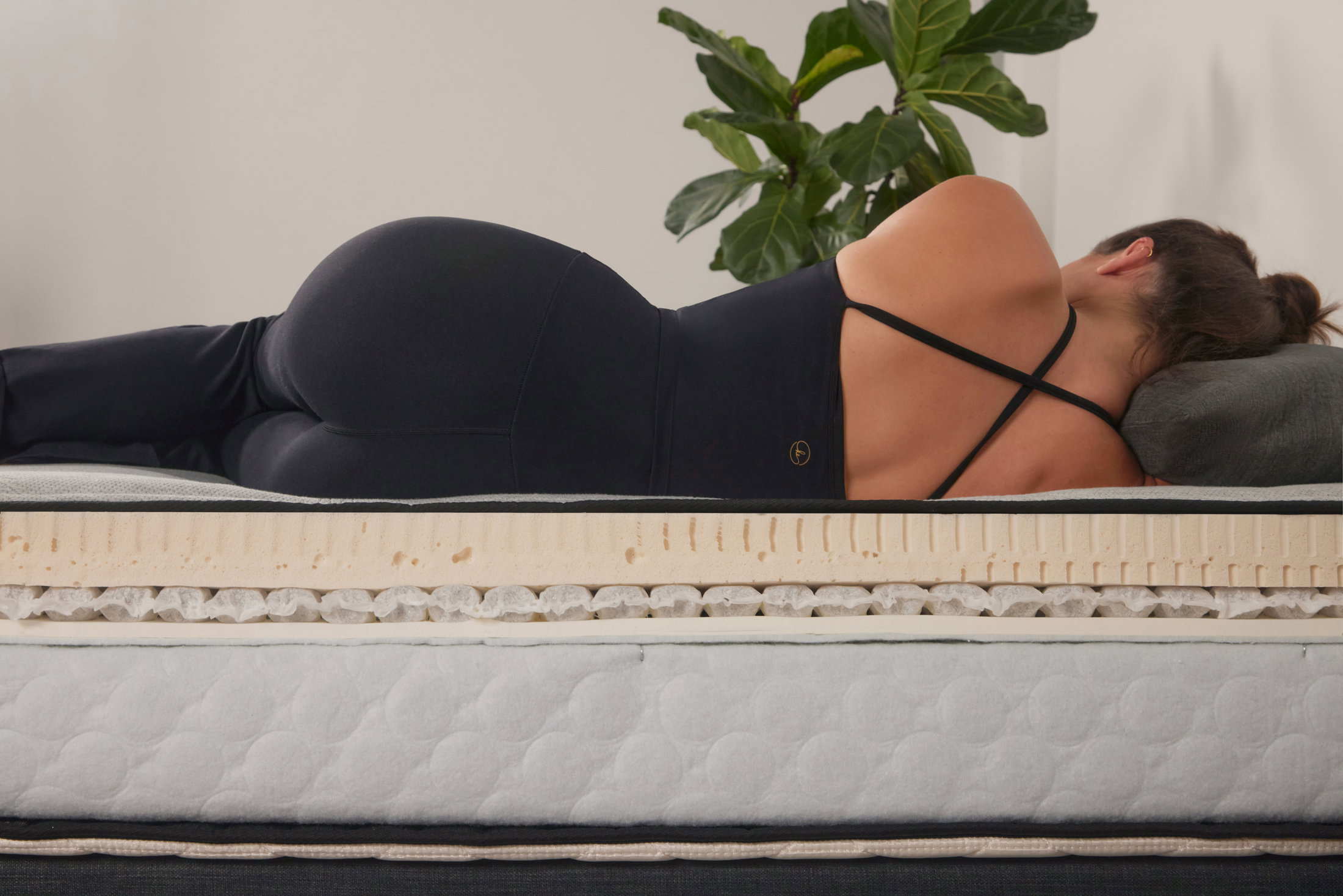
If you've researched mattresses for side sleeping, you've probably heard the same advice everywhere: "Side sleepers need a soft or plush mattress." It's repeated often, but it's dangerously oversimplified.
A 60kg side sleeper and a 100kg side sleeper have completely different needs. Recommending the same "soft" foam mattress to both is like selling the same suspension to a sedan and a pickup truck. One's going to bottom out, the other's going to ride like a brick.
From someone who has built mattresses for over a decade, I can tell you the real issue: it's not about soft versus firm, it's about matching spring tension to body weight. Get that wrong, and no amount of mattress toppers will save you.
Prefer to watch rather than read? Here's a video where I explain the whole thing.
The marshmallow on a table analogy
Let me explain what's actually happening with side sleepers and pressure points.
Imagine putting a marshmallow on a table and pushing your finger down through it. At first, it feels soft, right? But if you push hard enough (or long enough), your fingertip hits the table underneath. That's when it starts to hurt. Your fingertip is getting a disproportionate amount of pressure, not because the marshmallow is too firm, but because you've pushed through it entirely.
Your hips and shoulders are like the fingertip. When you lie on your side on a mattress with the wrong spring tension, your hips and shoulders push through the comfort layers and land directly on top of the springs. That contact point becomes a pressure point. The result is uncomfortability and soreness – usually a lot of tossing and turning at night.
The mainstream solution? Add more foam – softer foam, memory foam, mattress toppers. But that doesn't solve the problem. The only thing that works? Soften the table. Get the springs right for your body weight so they can contour around your hips and shoulders.
Body weight + spring tension = pressure relief
From my 15 years of experience with thousands of customers:
Body weight to spring tension matching:
- Under 50kg: Softer spring tension (not soft foam, soft springs)
- 50-80kg: Medium spring tension
- 80-100kg: Firm spring tension
- Over 100kg: Super Firm spring tension
Yes, you read that right. If you're an 85kg side sleeper, you likely need firmer springs under you, not a softer mattress.
Here's why. If you're too light for the springs, they won't yield to your body. Instead, your body yields to the springs and contorts during the night. If you're too heavy for the springs, you get a hammock effect, and your hips fall out of alignment.
A 50kg person finds most mattresses "too firm" because standard springs won't compress under their weight. A 120kg person finds those same mattresses "too soft" because they sink straight through them. The mattress quality isn't the issue. The relationship between body weight and spring tension is.
Why heavier side sleepers (80kg+) struggle with foam mattresses
If you're 80kg or heavier and sleep on your side, bed-in-a-box foam mattresses are a tough fit. Here's why.
Foam (even high-quality memory foam) has a limited ability to distribute pressure compared to properly designed pocket springs. When you're heavier, more force concentrates at your hips and shoulders. Foam compresses, but it doesn't contour the way properly tensioned pocket springs can.
A few things make it worse:
- Foam-only mattresses typically come in one firmness, maybe two
- That firmness is rarely matched to your specific body weight
- Over time, foam compresses permanently under heavier loads, creating dips at the hip and shoulder
I pull apart old mattresses regularly. Memory foam is always very soft around the hip area. Always. Usually, around the 4-5 year mark, memory foam softens at the hips, and you start to hit the firmer layers or springs underneath. If you're heavier than average, it happens faster. Latex holds up far better.
Live in Sydney? Come feel the difference.
Our Marrickville factory and Willoughby showroom are open for you to test different firmness levels. No salespeople, no pressure. Just mattresses.
What "point elasticity" actually means (and why it matters)
You won't see point elasticity mentioned on many mattress websites. It's the ability of a mattress to conform and respond to pressure at a specific point without affecting the surrounding areas.
Think about it: when you're on your side, your hips and shoulders create concentrated pressure points. A mattress with high point elasticity allows those areas to sink in independently while keeping your waist and legs properly supported.
Foam can't do this effectively. Even good foam distributes pressure somewhat, but it's a slow, compression-based response. A properly designed pocket spring system, on the other hand, has independent coils that compress exactly where pressure is applied and stay firm everywhere else.
And this is critical: most pocket springs in Australia are poorly designed. They use a low coil count in rows. Typically, the springs are a one-size-fits-all firm.
At Ausbeds, our pocket spring system is:
- High coil count: 986+ springs in a queen (compared to 600 in most cheap pocket spring mattresses)
- Honeycomb arrangement: Springs nested together to increase density and point elasticity
- No glued top layers: Allows springs to move independently
- Multiple spring tensions available: Matched to body weight
Hybrid mattress vs foam mattress
The best mattress for side sleepers isn't "all foam" or "all springs." It's a hybrid approach, but not the way most hybrid mattresses are made.
The correct way:
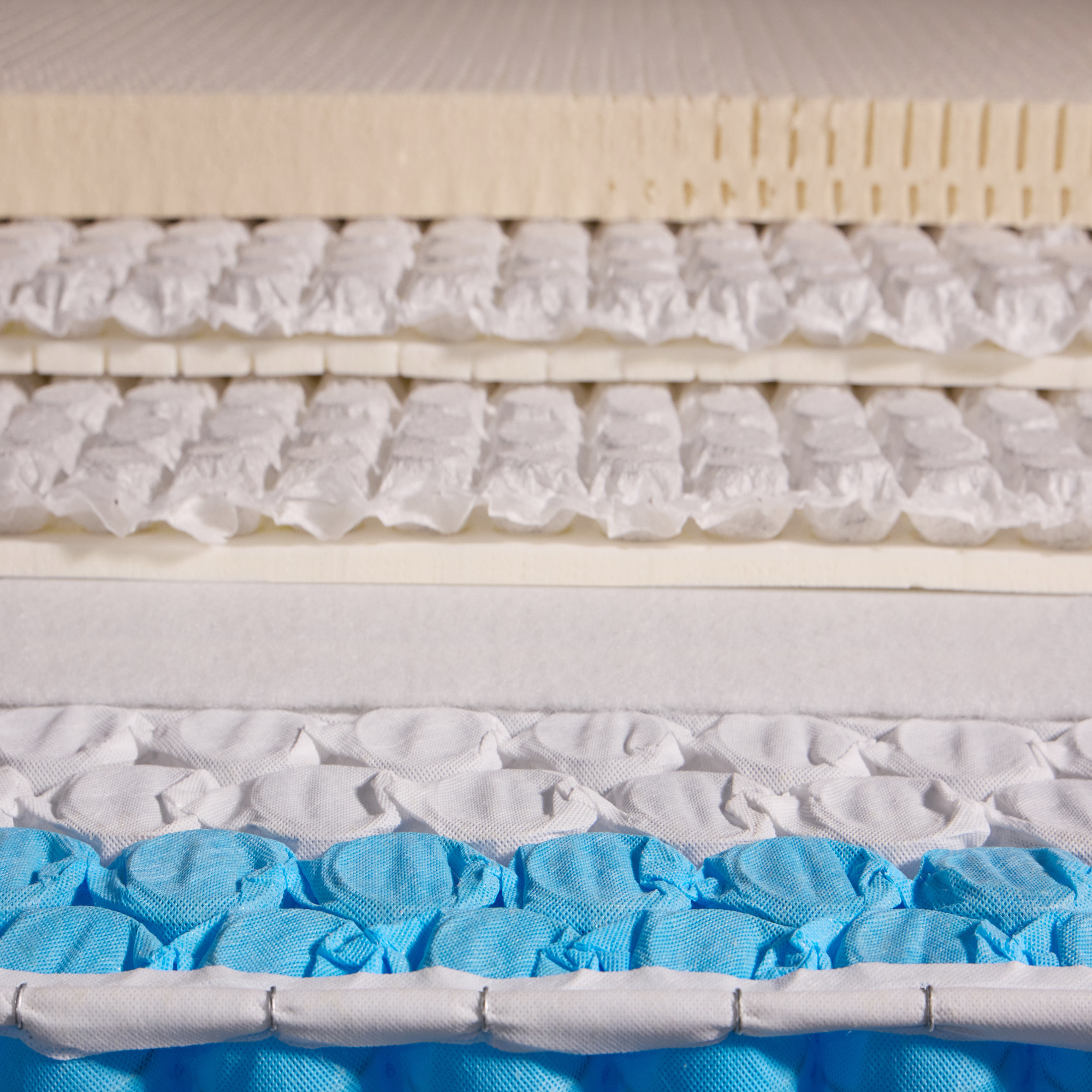
- Start with body-weight-matched pocket springs (986 springs in a queen, honeycomb pattern, appropriate tension for your weight)
- Add micro-springs for enhanced contouring (1,600-3,200 micro coils for deep pressure relief at hips and shoulders)
- Use minimal foam or latex, just enough so you don't feel the springs (5cm of latex or high-density foam, not 10-15cm)
Why use a minimal amount of foam? Foam stores heat, and thick foam reduces the point elasticity of the springs. The foam is simply there so you don't feel the springs poking you; that's it. The springs are doing 90% of the pressure distribution work. The latex really moulds to the pocket springs underneath, so the shoulders and hips can sink right in.
For heavier side sleepers: firmer support + better cushioning
If you're 100kg+ and sleep on your side, the truth may seem counterintuitive: you need firmer support springs. But you also need more cushioning on top to distribute the pressure at your hips and shoulders.
For heavier people, I increase the spring tension from medium to extra firm, but I also make sure the top is well-padded. Heavier people will have a more challenging time with comfort because there is more weight to be distributed. So I don't think saying "firmer is better if you are heavy" is accurate. I think it's more accurate to say, "firmer support is required so the body doesn't hammock" is more accurate. You can still put soft foams up the top to help with circulation.
This is why you might need:
- Extra firm pocket springs (to prevent hammocking and keep your spine aligned)
- Double layer of micro springs (for enhanced contouring at pressure points)
- 5cm of soft latex (to cushion the initial contact)
The firm springs stop you from sinking too far (which would misalign your spine). The micro springs and latex create the pressure relief at your hips and shoulders. You get support and comfort, not a trade-off between the two.
Why bed-in-a-box mattresses fail heavier side sleepers
Most bed-in-a-box mattresses, whether foam or hybrid, fail heavy people because they use a one-size-fits-all spring tension with cheap foam comfort layers.
- Foam compression: Memory foam and polyfoam compress faster under heavier loads. That "pressure relief" layer? It's gone within months, leaving you on springs that were never right to begin with.
- Bottoming out: You sink through the comfort layers until your hips hit the firmer base foam or springs. This creates the exact pressure points the mattress promised to eliminate.
- Sagging: Many "sagging" complaints from heavier sleepers aren't about defective mattresses; they're about springs that were too soft from day one. The spring tension was wrong for your body weight.
I hear this constantly: "I've used many bed-in-a-box mattresses over the years and every single one dips in the middle after only a year."
What we do at Ausbeds
So enough ranting about what doesn't work. Let me tell you what actually does work, and why I designed my mattresses the way I did.
Instead of piling on foam and hoping for the best, Ausbeds uses a three-part system that addresses the actual problem:
1. Body-weight-matched spring tension
When you order an Ausbeds mattress, the spring tension (and latex selection) is selected based on your body weight:
- Under 50kg: Softer springs (with soft latex)
- 50-70kg: Medium springs (with soft latex)
- 70-90kg: Medium springs (with medium latex)
- 90-110kg: Firm springs (with medium latex)
- 110-130: Very firm springs (with medium latex)
- Over 110kg: Very firm springs (with firm latex)
From my experience, I can guess which spring tension to put in a person's mattress based purely on body weight. It's not random. I've been doing this long enough to know.
The springs hold you at the correct height, not sinking too far (hammocking), not pressing back against you (contorting). This is the foundation everything else builds on.
For side sleepers, this means:
- Your hips sink just enough to keep your spine aligned
- Your shoulders can drop into the mattress naturally
- The springs absorb and distribute pressure without bottoming out
2. Micro springs for pressure relief
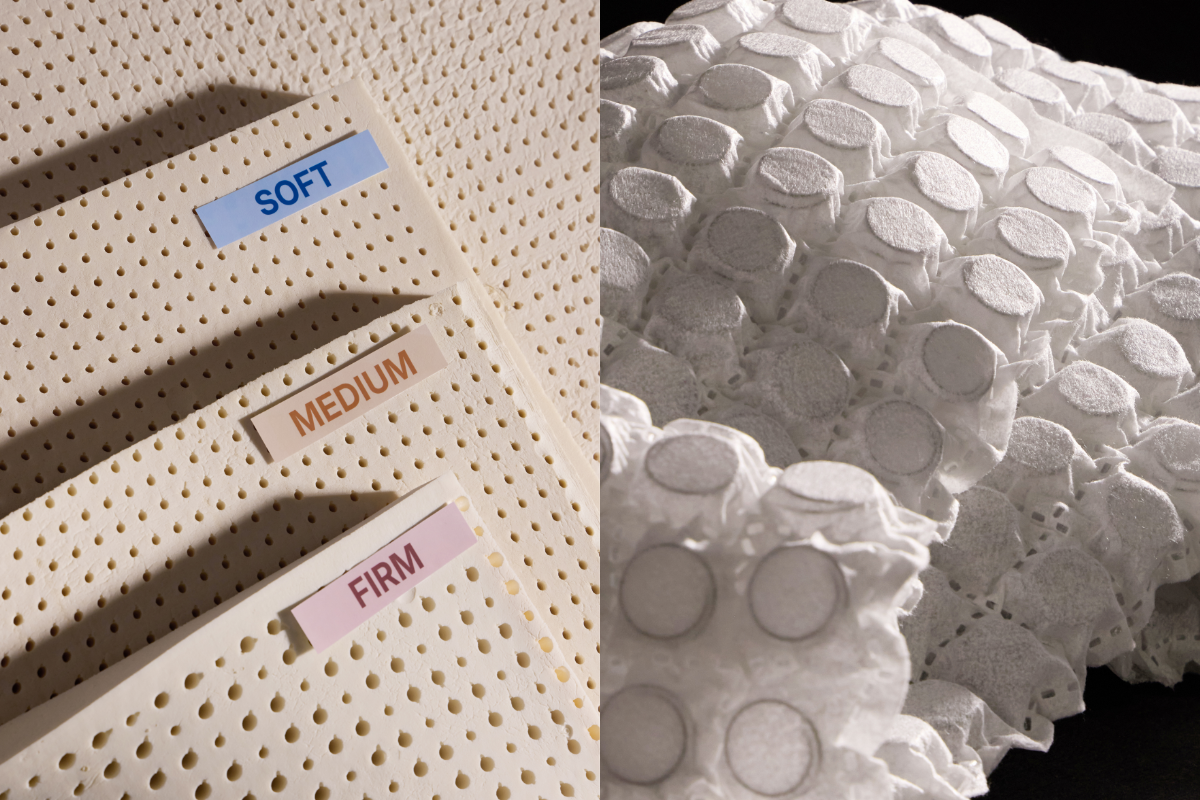
Here's where Ausbeds diverges from bed-in-a-box hybrids. Instead of thick foam layers, the Aurora and Cloud models use micro springs, 1 layer and 2 layers, respectively.
I tested micro springs under latex, against foam under latex. The vast majority of side sleepers preferred the feel of the micro springs.
Micro springs provide:
- Contouring without heat retention: Springs breathe, foam traps more heat
- Pressure distribution: Each micro spring responds independently
- Long-term durability: Springs don't compress and soften like foam
The Cloud uses 2 layers of micro springs (3,200 for Queen, 3,600 for King) for the deepest contouring while maintaining support. It's the perfect blend between plush and medium support, very supportive without leaving you feeling like you're perched on top of the bed or sinking into it.
3. Minimal latex (not thick foam)
Ausbeds uses only 5cm of natural latex on top, just enough so you don't feel the springs, but not so much that it traps heat or compresses under heavier weights.
The more foam, the more heat. I use the minimum amount of foam possible. The latex is just there so you don't feel the springs.
Why this matters for heavier side sleepers:
- Latex doesn't soften and collapse like memory foam or polyurethane
- Natural latex lasts 3-4 times longer than polyurethane foam
- Less foam means less heat retention
- When it does eventually wear (after years), you can replace just that 5cm layer, not the entire mattress
Comparing options: what should you actually buy?
Let me break down your options. All just my opinion, of course, but I've done this for a long time.
Typical bed-in-a-box (Sleeping Duck, Ecosa, etc.)
Construction:
- 5-10cm memory foam or polyfoam comfort layer
- Foam transition layers
- Pocket springs (one tension for all weights)
- Foam encasement edges
For heavier side sleepers:
- Spring tension not matched to body weight
- Foam compresses faster under heavier loads
- "Medium-firm" springs bottom out under 90kg+ bodies, too firm for lighter bodies
- Can't adjust firmness after purchase
- The entire mattress must be replaced when the foam wears out
Price: $1,200-$2,000 (Queen)
Trial: 100-120 nights (return only, no adjustments)
I've heard this from multiple customers: "I tried Ecosa but found it too soft for my liking. Ended up with Ausbeds after visiting their showroom. The ability to change firmness layers is a game-changer."
Ausbeds Aurora (natural latex + microsprings)
Construction:
- 5cm natural latex (not petroleum foam)
- 1,600 micro springs (Queen) for contouring
- 986 honeycomb pocket springs (body-weight-matched tension)
- Wire edge for breathability
For heavier side sleepers:
- Spring tension specifically selected for your weight (80kg+, 100kg+, 120kg+)
- Micro springs provide pressure relief without foam compression
- Minimal latex won't soften at the hips like memory foam
- Adjustable firmness (3-level range at home, spring swaps available)
- Replace individual components when they wear out
Price: $2,450 Queen / $2,750 King
Trial: 7 months with two free component swaps
Warranty: 10 years
Customer feedback: "I'm a side sleeper and got the Aurora from Ausbeds. Took a week to get used to it, but now it's perfect. The showroom let me test different firmness levels, which was awesome."
Ausbeds Cloud (premium comfort and maximum pressure relief)
Construction:
To ensure maximum support, especially for those seeking a very firm mattress, explore our Very Firm Cloud Mattress range, crafted with robust construction and customizable firmness.
- 5cm natural latex
- Dual layers of micro springs (3,200 total for Queen)
- 986 honeycomb pocket springs (body-weight-matched)
- Wire edge support
For maximum side sleeper comfort:
- Double micro springs for the deepest pressure relief
- Body-weight-matched pocketed coils for proper spinal alignment
- Best mattress for side sleepers who want cloud-like comfort without sacrificing support
- Same adjustability and component replacement as Aurora
- Natural materials throughout, no memory foam mattress issues
Price: $2,950 Queen / $3,250 King
Trial: 7 months with two free component swaps
Warranty: 10 years
Customer feedback: "This bed is incredible, so soft but supportive at the same time."
Motion transfer: what reduces partner disturbance
If you share your bed and one of you is a side sleeper who tosses and turns, motion transfer matters. Here's the truth: pocketed coils reduce motion transfer way better than continuous coil systems, but they're not magic.
The best motion isolation comes from modular foam layers:
- High coil count (986 vs 600 springs makes a huge difference)
- Honeycomb arrangement (springs work independently)
- Micro springs layer (absorbs movement at the surface)
- Minimal foam layers (counterintuitively, thick foam can transfer movement in waves)
Memory foam mattresses do excel at motion isolation, I'll give them that. Memory foam is the champ when it comes to partner disturbance. But for side sleepers over 80kg, you're trading motion isolation for pressure relief and durability, and that's usually not a trade worth making.
Mattress for side sleepers
Alright, let's bring this all together. If you're shopping for a mattress for side sleepers, here's what actually matters:
- Body weight matched spring tension (this is 80% of getting it right)
- High coil count pocket springs (986+ for a queen)
- Micro springs or latex for pressure relief (not thick memory foam)
- Minimal foam layers (heat management and durability)
- Adjustability (because nobody gets it perfect on the first try)
The best mattress for side sleepers isn't determined by reviews or marketing. It's determined by whether the springs are right for your body weight and whether the comfort layers provide pressure relief without trapping heat or breaking down.
For heavier side sleepers (80kg+), this is even more critical. You need firmer springs than you think, plus better cushioning on top. It sounds contradictory, but it's the only thing I've seen work consistently over 15 years.
If you're in Sydney, come try them in the showroom. If you're interstate, we can work it out with our trial period and component swaps. Either way, focus on getting the springs right first. Everything else is just details.
Dan M on ProductReview switched to the Aurora and saw results fast: "Within days my shoulder pain was gone and my neck pain is gone."
Frequently asked questions
About the author

Karl is the owner of Ausbeds. He started the company after realising how many people were frustrated by mattresses that failed too soon and too often. So he built a workshop in Sydney and began making mattresses the way they should be made - with transparent materials, adjustable designs, and customer-first thinking. When he's not in the showroom/workshop, he's on Reddit, Whirlpool, and OzBargain, cutting through industry fluff with honest mattress advice.