


Memory Foam vs. Latex Mattress: An Honest Comparison
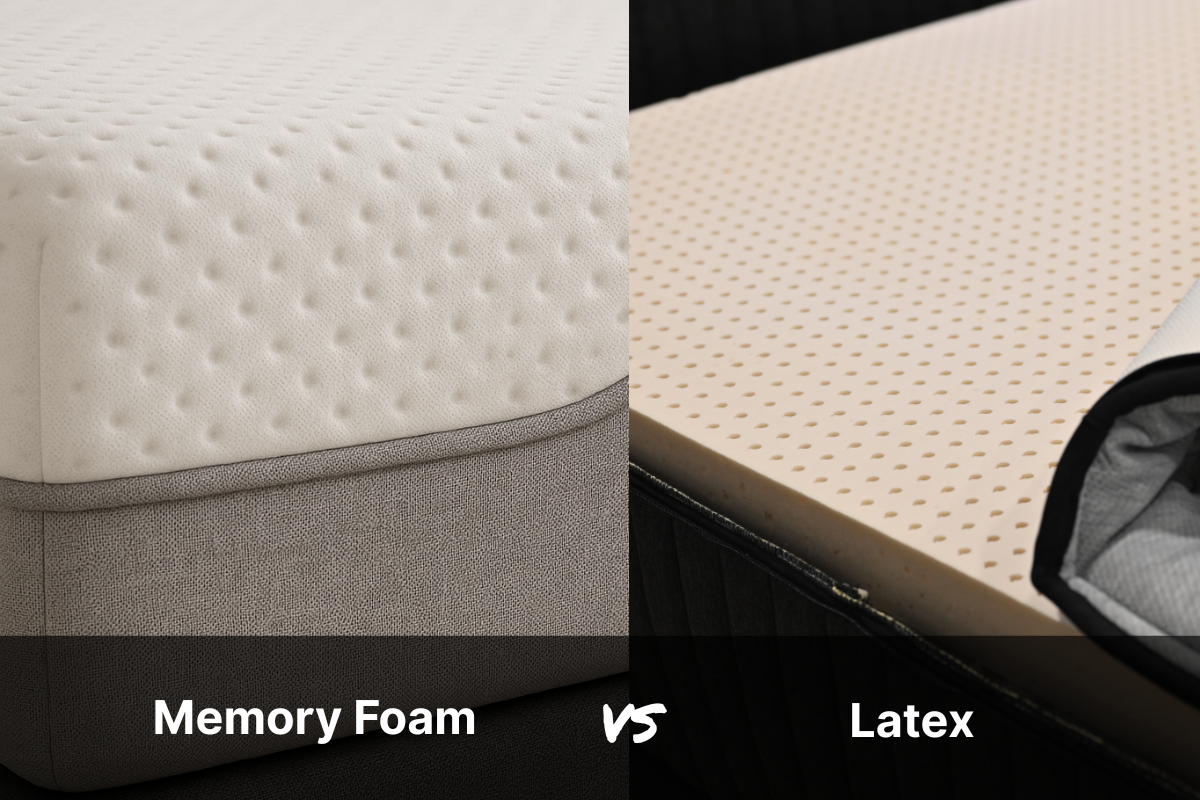
Customers often ask me about the differences between latex and memory foam mattresses. While they are both technically foam mattresses, they are quite different in construction, durability and feel.
Memory foam
Memory foam is a synthetic material made from polyurethane with additional chemicals that give it viscoelastic properties. This means it softens in response to body heat, allowing it to conform to your body. Once the heat or pressure is removed, it slowly returns to its original form.
Natural latex
Latex comes from rubber trees. It is a natural material that is resilient and bouncy. It supports you with a more responsive elasticity, adjusting to movement instantly rather than relying on heat to mould around you like memory foam.
Why I prefer natural latex foam
In my experience, natural latex is the superior material for mattresses. It has an open-cell structure manufactured with "pincore" holes that allow for natural breathability – an advantage over the closed-cell structure of traditional memory foam. When I open up a 15-year-old latex mattress, the foam often looks exactly as it did the day it was poured. Polyurethane foam, by contrast, tends to oxidise and collapse over time.
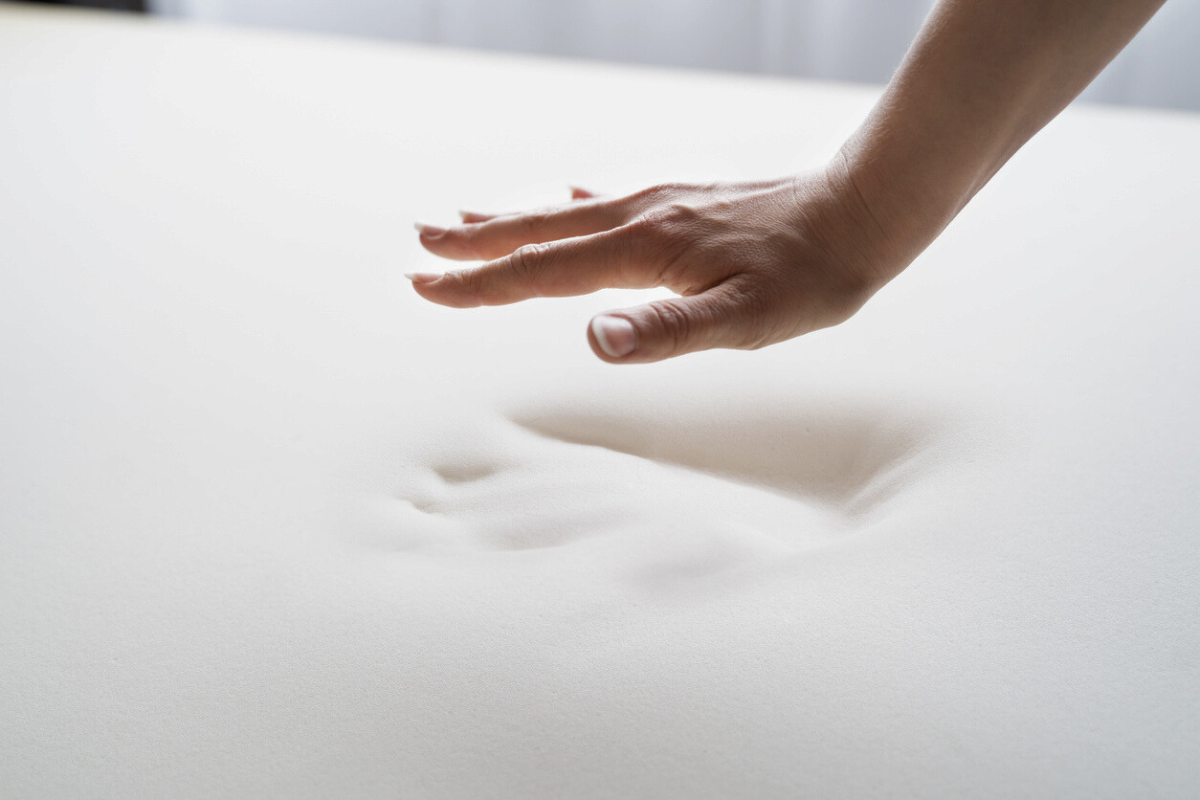
The quicksand sensation of memory foam
The defining characteristic of memory foam is its slow recovery – how it gradually returns to its original shape after you move. This creates a "hugged" sensation that many find comforting. It also absorbs energy well, making it excellent for motion isolation. If your partner tosses and turns, you are far less likely to feel it on a memory foam bed.
This "hug" comes with a trade-off, though. Memory foam wraps around you, creating more surface area contact with your skin and increasing heat retention. If you are one of the many hot sleepers in Australia, an average memory foam mattress can feel like sleeping on a heat battery.
The chemistry of memory foam
As a manufacturer, I have to be honest about what goes into these beds. Memory foam is made from polyurethane, with various synthetic materials added during manufacturing to achieve that slow-sink feel. This can lead to off-gassing – the release of volatile organic compounds (VOCs). While most of this dissipates within a few days, people with chemical sensitivities or allergies may find the initial smell bothersome.
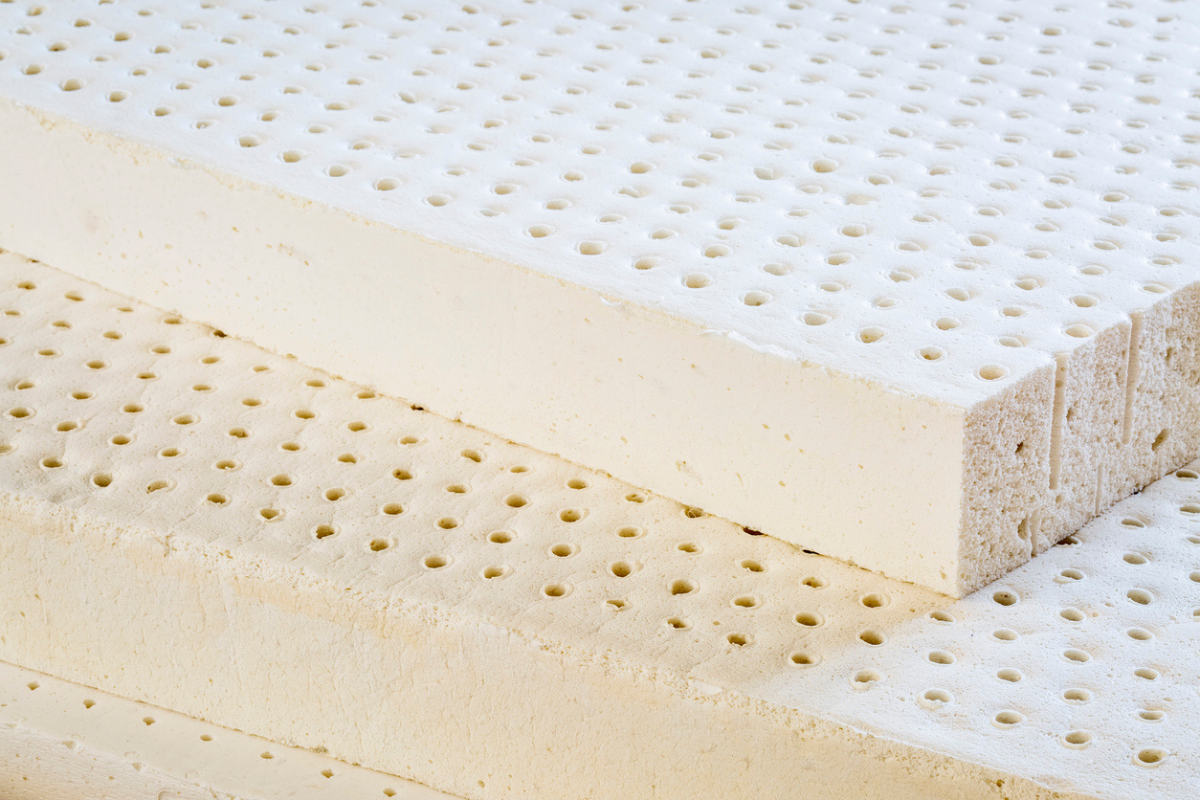
Latex mattress: the responsive alternative
If you dislike the feeling of being "stuck" in your bed, a latex mattress is usually the better option. Latex is a high-density material, typically 70kg/m³ or higher, giving it a very different feel to the 50–60kg/m³ density of most memory foam.
Natural latex vs synthetic latex
Not all latex foam is created equal. You will generally see three types on the market:
- Natural latex is made from 100% rubber tree sap. It is the most durable and naturally hypoallergenic.
- Synthetic latex is made from styrene butadiene rubber (SBR). It is cheaper to produce but lacks the lifespan of the natural version.
- Blended latex is a mix of both.
I exclusively use 95% organic latex in my factory because it provides the best deep compression support and is naturally resistant to dust mites and mould.
Dunlop latex vs talalay latex
There are two main ways to turn liquid latex into a solid mattress:
- Dunlop latex is poured into a mould and baked, producing a firmer support layer that is slightly denser at the bottom. It is a fantastic choice for stomach sleepers who need their spine aligned.
- Talalay latex involves a vacuum and flash-freezing step. It produces a more consistent, lighter feel, often used in quality mattresses as a softer comfort layer.
Latex vs memory foam: heat and temperature regulation
One of the biggest complaints I hear about foam mattresses is that they sleep hot. After years of customer feedback and testing, here is how heat retention breaks down:
- 60% – Amount of foam (the dominant factor)
- 20% – Density of foam (higher density holds more heat)
- 15% – Type of foam (memory foam worst, latex best) 5% – Fabric and covers
A thin layer of dense foam sleeps cooler than a thick layer of light foam. Thickness matters more than anything else.
Why memory foam retains heat
Memory foam has a closed-cell structure. Think of it like a sponge with tiny holes that don't let air through easily. It needs to absorb and retain body heat to soften. As the foam softens, you sink deeper, creating more contact with the surface, which traps even more heat. Memory foam stores approximately 70 times more heat than air by volume. When a mattress is 25–30cm of solid memory foam with no springs, you are sleeping on a heat battery. This isn't a defect – it's physics. Gel memory foam was invented specifically to try to mask this.
Temperature regulation: latex
Natural latex has a breathability that synthetic materials struggle to match. Its open-cell structure with pincore holes acts as a heat sink. Instead of the material becoming a battery for your warmth, latex conducts heat away from your body. It doesn't "sleep cool" exactly – it redistributes heat differently to closed-cell foams like memory foam. The result is that you don't wake up in a pool of sweat at 3am.
Latex or memory foam: support and spinal alignment
Whether you choose latex or memory foam, the goal is proper spinal alignment. Your mattress should keep your spine aligned regardless of your sleeping position.
- Back sleepers need a balance of pressure relief and support. Both memory foam and latex can work here, provided the density is high enough to prevent your hips from sinking too low.
- Side sleepers often find memory foam better for pressure relief on the shoulders. However, heavier sleepers may find they bottom out on lower-quality foams.
- Stomach sleepers almost always do better on latex. They need firmer support to prevent their lower back from arching, and latex provides the "push back" that memory foam lacks.
Gel memory foam: does it actually work?
Many companies market gel memory foam as the solution to sleeping hot. They infuse the polyurethane foam with gel beads or layers of "cooling" material. In my 15 years of experience, this is mostly marketing fluff.
Gel memory foam might feel cool to the touch for the first ten minutes, but it cannot overcome the laws of physics. Once the gel has absorbed as much heat as it can, the heat retention of the underlying foam takes over. If you want a mattress that stays cool all night, you are better off reducing the amount of foam altogether or choosing natural latex.
Comparing durability
This is where the latex vs memory foam debate usually ends for my customers. Natural latex is highly durable – it is common for a natural latex bed to last 15–20+ years without developing significant pressure points or body dips.
An average memory foam mattress lasts about 5–7 years. Over time, the nightly heat cycling – your body warming the foam, then it cools during the day – causes the polyurethane to break down. Eventually, it loses its ability to return to its original shape, leaving you with a permanent dip in the middle of the bed.
| Factor | Memory Foam | Natural Latex |
| Density | 50-60kg/m³ | 70kg/m³+ |
| Lifespan | 5-7 years | 3–4 times longer than all other foams |
| Durability | Moderate | High |
| Materials | Synthetic | Natural |
Body weight and mattress choice
Your body weight plays a massive role in which mattress type will work for you.
Light sleepers (under 70kg) don't put as much stress on the material. You can often get away with a memory foam mattress for longer because you don't compress the cells as deeply.
Heavier sleepers (90kg+) should, in my opinion, avoid an all-foam memory foam mattress. The added body weight causes deep compression, generating more heat and accelerating the breakdown of the foam. Latex or a hybrid with heavy-duty springs is a much better investment for long-term sleep health.
Final thoughts from the factory floor
Memory foam and latex serve different needs.
- Choose memory foam if you want deep body-contouring and the "hug" sensation, you sleep in one position and don't move much, you are on a tighter budget upfront, you don't run hot, or you are a lighter sleeper (under 70kg).
- Choose latex if you move around during sleep, you sleep hot or live in a warm climate, you want a mattress that lasts 15–20 years, you are a heavier sleeper (90kg+), or you prefer responsive support over slow-sinking foam.
Less foam means less heat. Quality foam means longer life. And springs mean you are not relying on foam alone for structural support. Choosing between memory foam and latex shouldn't be about marketing slogans – it is about how the materials handle body heat, how they support your body weight, and how long they will last before ending up in the bin.
The best results often come from combining technologies. A natural latex layer over high-quality pocket springs gives you the pressure relief and motion isolation of a foam bed, with the temperature regulation and durability that only springs and natural materials can provide.
Before you buy a new mattress, think about the long-term cost. Spending a bit more on latex now can save you thousands of dollars and several trips to the mattress store over the next two decades.
Frequently Asked Questions on Memory Foam vs Latex
About the author

Karl is the owner of Ausbeds. He started the company after realising how many people were frustrated by mattresses that failed too soon and too often. So he built a workshop in Sydney and began making mattresses the way they should be made - with transparent materials, adjustable designs, and customer-first thinking. When he's not in the showroom/workshop, he's on Reddit, Whirlpool, and OzBargain, cutting through industry fluff with honest mattress advice.