Dunlop vs Talalay Latex
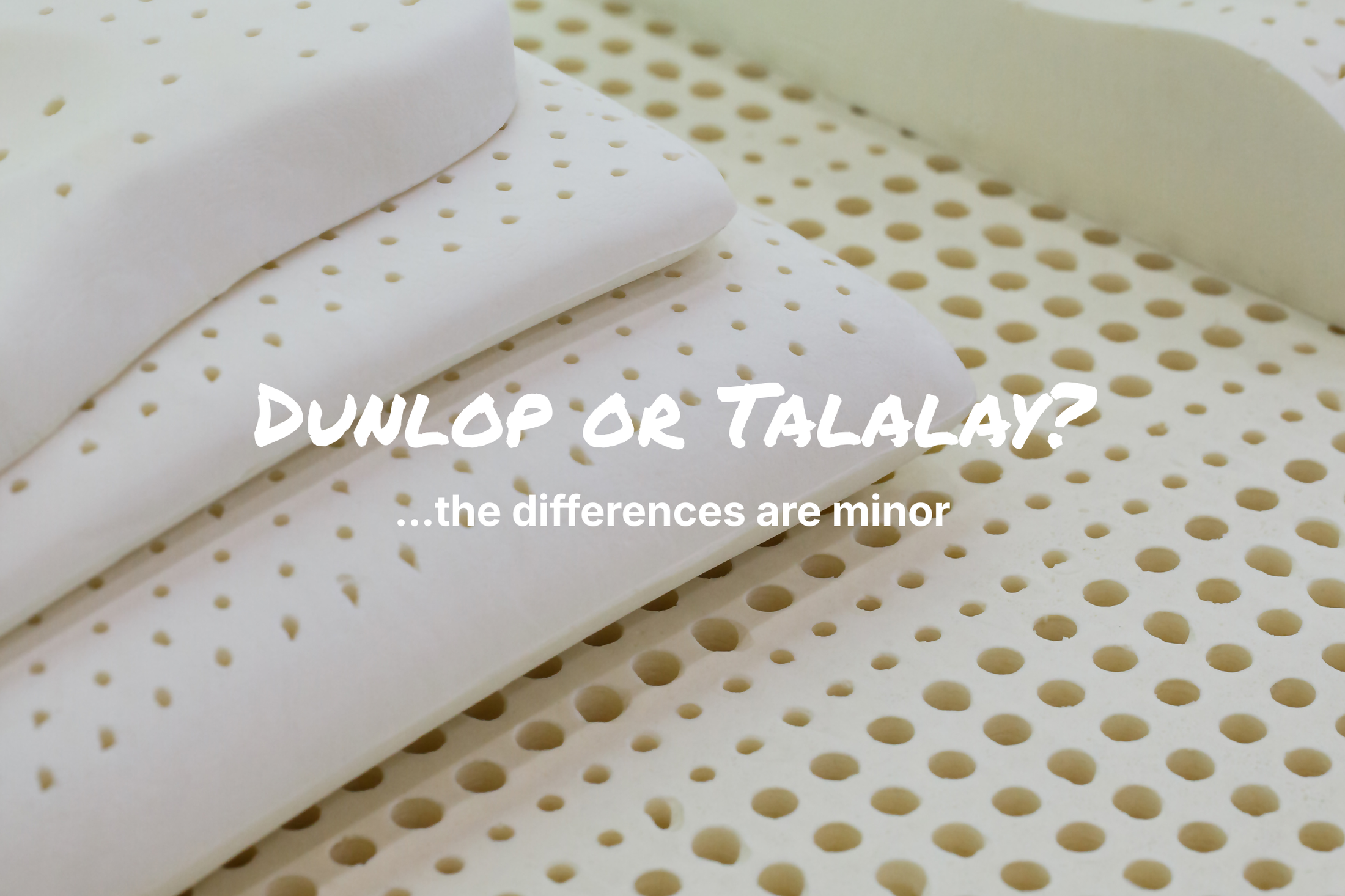
Both Dunlop and Talalay come from the same place - the rubber tree - but the production method changes the durability, feel and cost. I'll break down the differences.
What is latex?
We first need to understand the raw material. Latex foam starts as liquid latex tapped from the rubber tree. This liquid latex extract is a natural material that separates natural latex mattresses from those made with synthetic materials or polyurethane foam. I've written more on natural latex here.
The Dunlop process
The Dunlop process is the original method, developed back in 1929. It is a simple way to create latex foam.
Here is how the Dunlop method works:
- We whip the liquid sap into a frothy foam.
- We pour the mixture into a mould on a conveyor belt.
- The mould is placed in a vulcanisation oven where the baked latex sets solid.
- The foam is washed to remove residual soaps and proteins.
Because the liquid is poured and then baked, gravity takes over. The sediments in the mixture settle toward the bottom before it solidifies. This makes Dunlop latex naturally slightly denser at the bottom.
Dunlop latex is heavy, supportive, and feels substantial. If you want a dense latex that holds its shape for decades, Dunlop foam is the standard.
The Talalay process
The Talalay process is a newer, more complex method. It takes the same raw material but adds several steps to the manufacturing process to create a slightly fluffier latex.
Here's how latex is produced with the Talalay method:
- The latex mixture is poured into a mould, but it is only partially filled.
- The mould is vacuum sealed. This expansion disperses the foam evenly to fill the space.
- Flash freezing is used to lock the cell structure in place.
- The mould goes into a vulcanising oven to bake.
The key difference here is the flash freezing and the vacuum. By expanding the foam in a vacuum, the Talalay process creates a consistent open-cell structure from top to bottom. It requires more energy and time, which usually results in a higher price tag.
Talalay latex offers a slightly softer, springier feel.
Dunlop vs Talalay latex comparison
In my experience making mattresses, there are only marginal differences between Dunlop and Talalay. Both are outstandingly durable, breathable and supportive for mattresses. For the most part, the difference is in the price. I can't justify the price increase if I used Talalay over Dunlop, but that's just me.
1. Firmness and feel
Dunlop latex is slightly denser and firmer. The Dunlop process uses more raw material. It is ideal for a mattress core and for durable comfort layers of a mattress.
Talalay latex is softer. The Talalay foam structure allows for a distinct bounce. It is often found in pillows and the top comfort layers of mattresses.
2. Durability
Dunlop latex is the most durable latex available. It resists sagging extremely well. Talalay latex foam is durable compared to memory foam or polyurethane foam, but because it is less dense, it may soften faster than Dunlop foam over a very long period. Because of its density, Dunlop is also heavier than Talalay latex.
3. Cost
The Talalay process involves flash freezing, vacuum-sealed chambers, and carbon dioxide gas. It takes about four times longer to manufacture than Dunlop. Consequently, Talalay latex mattresses can be more expensive, depending on where you are in the world.
Why I use Dunlop latex at Ausbeds
When I build a latex mattress, I want it to last. Dunlop latex provides the necessary support and comfort that I want in a mattress. If I used the Talalay process in my latex layer, I would have to increase the price. The differences are too minimal to justify this increase.
Summary of characteristics
Dunlop process:
-
Liquid latex is whipped, baked, and washed.
-
Denser, heavier, firmer feel.
-
The bottom side is denser.
-
Ideal for support core and firm comfort layers.
Talalay process:
-
Partially filled mould, vacuum expanded, frozen.
-
Softer, strictly consistent structure.
-
Ideal for pillows and soft mattress toppers.
-
It can have a higher price tag.
People also ask
About the author

Karl is the owner of Ausbeds. He started the company after realising how many people were frustrated by mattresses that failed too soon and too often. So he built a workshop in Sydney and began making mattresses the way they should be made - with transparent materials, adjustable designs, and customer-first thinking. When he's not in the showroom/workshop, he's on Reddit, Whirlpool, and OzBargain, cutting through industry fluff with honest mattress advice.