


The Natural Latex Mattress Guide: Don’t Fall for the 1cm Marketing Trick
The latex marketing problem
Here's something that'll make you mad: a retailer can put 1cm of fake latex in a mattress and legally call it a "latex mattress." I've seen it hundreds of times, and it's pure marketing BS.
The problem? Most people don't know what real latex actually is, so they can't tell they're being sold plastic with a latex sticker on it.
From someone who works with these materials all day, every day for over a decade, I can tell you the majority of "latex mattresses" out there are nothing of the sort. They're foam mattresses with a token amount of synthetic latex thrown in so the marketing department can use the word.
What is natural latex?
A lot of people think that latex is plastic or made from petroleum, when it's a completely natural material.
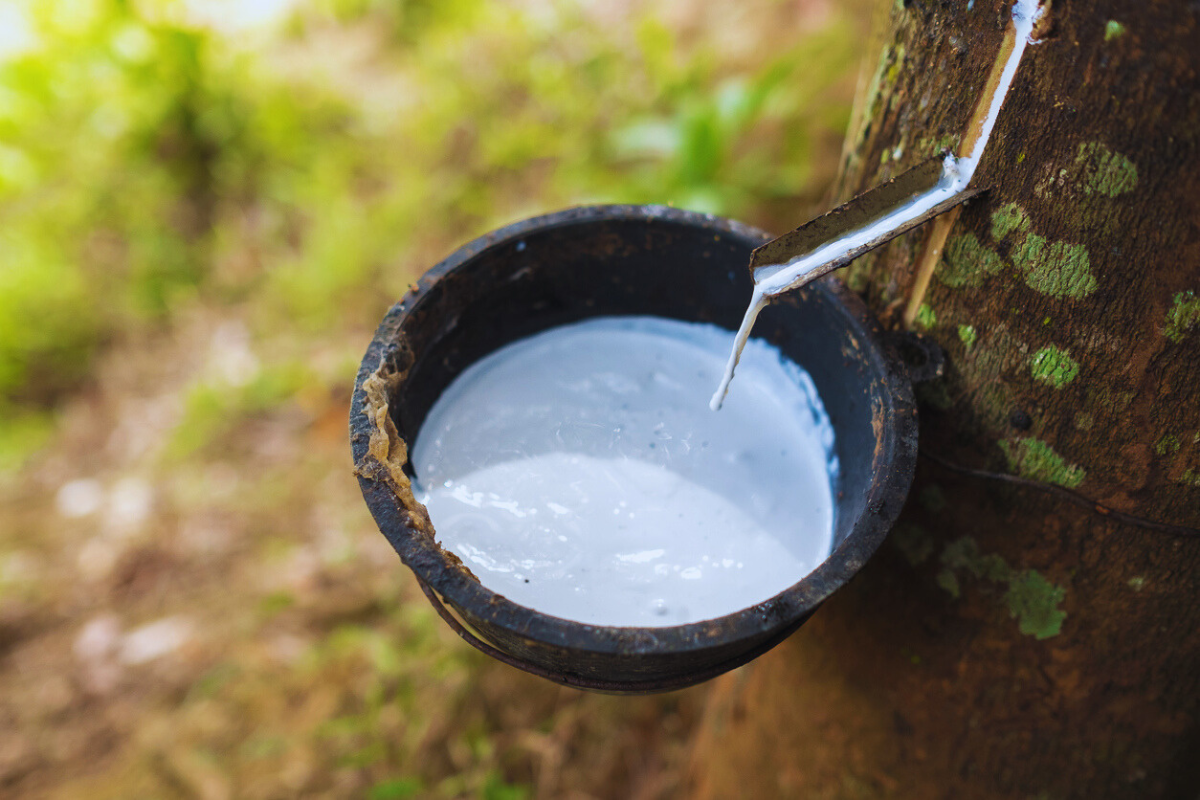
Natural latex is the milky liquid collected from rubber trees, grown mostly in Thailand, Sri Lanka, Malaysia, Indonesia, and Vietnam. Tappers cut a spiral groove into the bark, and the latex drips into a cup. It's a different fluid from the tree's sap, and the tree keeps producing it for decades without harm.
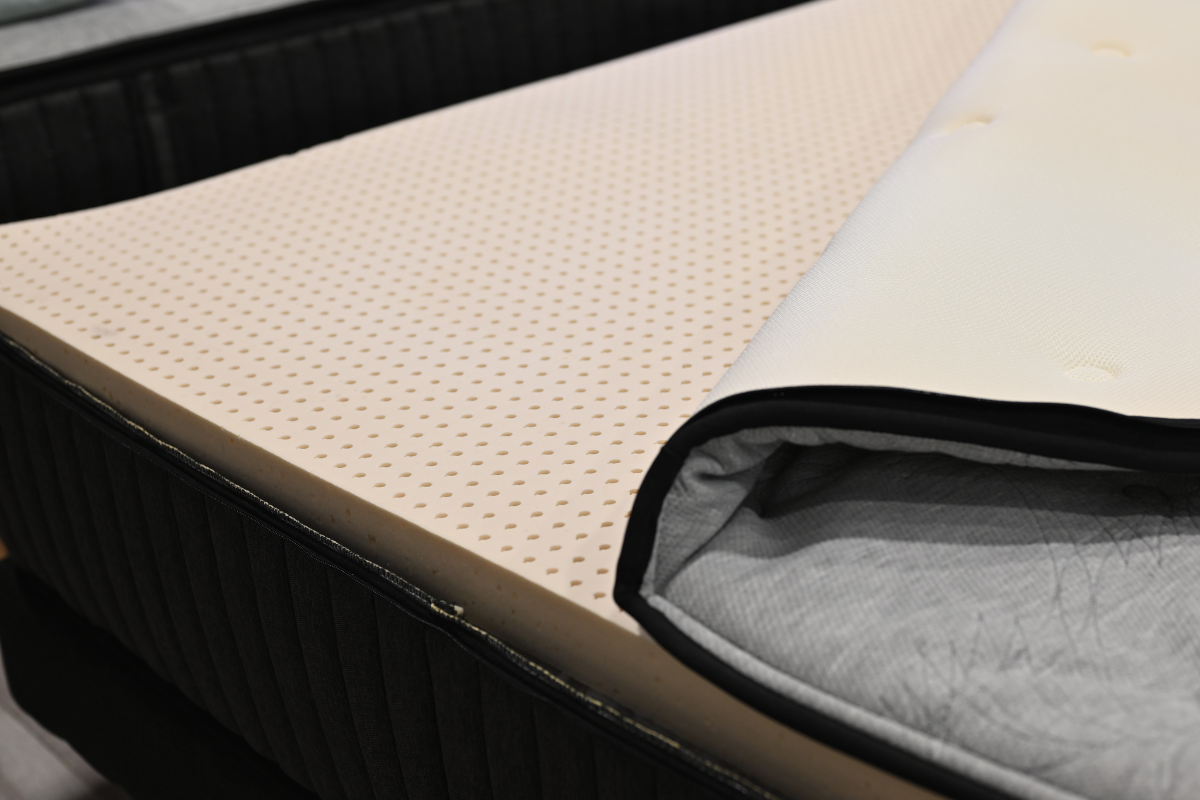
To turn it into a latex slab, the liquid is whipped into a foam, poured into moulds with metal pins running through them, and steam-cured. Those pins create the distinctive 10mm pincore holes you see in real Dunlop latex – they let heat penetrate evenly during the baking process. Funnily enough, this adds breathability to the finished foam.
Real latex, and what I use at Ausbeds, is 95-97% natural rubber and GOLS certified (the Global Organic Latex Standard – the strictest natural latex certification going). The remaining 3-5% are natural additives that make the liquid latex set properly during the baking process. Without them, tree sap would just stay liquid.
Fake latex is usually 60% polyurethane foam with a small amount of latex mixed in. It has 4mm pincore holes and feels nothing like the real thing.
How to spot fake latex foam
If you can see inside the mattress, look at the holes:
- Real Dunlop latex: 10mm holes (pencil-width)
- Synthetic blend: 4mm holes (pen-tip size)
Then ask how thick the latex layer is. If they say 8–12mm, that's a joke. Even if it were real latex, you'd never feel a benefit from a layer that thin.
The trick is simple. Make a mattress, drop 1cm of synthetic blend in it, slap a "latex mattress" label on. The customer has no clue what they're looking at, and the retailer charges a premium.
Why retailers use minimal latex
I'll be honest – I don't think retailers are evil. They're responding to business pressures.
Real natural latex is expensive and hard to source. When I order it, I have to:
- Order a full 20-foot container from overseas
- Wait 3 months for delivery (6 weeks pre-COVID)
- Store 200+ pieces in expensive Sydney warehouse space
- Work within fixed mould sizes
Polyurethane foam? I can order three sheets cut to spec and have them delivered in two days.
When retailers push manufacturers for lower prices, latex gets squeezed out. Most retailers and bed-in-a-box brands are drop shipping companies running on ads. When Casper went public in the US, the prospectus showed roughly 30% of their sale price was going to digital advertising. When you spend that much on ads, the materials get cheaper to compensate. The latex layer is one of the easiest ways to cut corners.
Dunlop or Talalay: which is inside your mattress?
Shopping for latex, you'll run into two manufacturing processes: Dunlop and Talalay. Both come from the same rubber tree. The difference is how the foam is made.
Dunlop is the original method, developed in 1929. The liquid latex is whipped into a foam, poured into a mould, and steam-cured in one go. Gravity pulls the mixture down as it cures, so the finished foam is slightly denser at the bottom. Heavier, firmer, more durable.
Talalay adds two steps. The mould is only partially filled, then vacuum-sealed so the foam expands to fill it evenly. It's flash-frozen to lock the cell structure before curing. The result is a lighter, fluffier, more consistent foam top-to-bottom. It costs significantly more to produce.
I use Dunlop in all my mattresses. It's more durable, holds its shape for decades, and I can't justify passing the Talalay price increase on to customers when the performance difference is marginal.
For the full breakdown – process, firmness, durability, price – see my Dunlop vs Talalay guide.
Does latex sleep hot?
Not if the mattress is built properly.
It's physics: more foam = more heat. Your body heat needs somewhere to go, and the thicker the comfort layer, the more heat gets trapped.
Latex has two things going for it. The natural open-cell structure lets air move through it, and the 10mm pincore holes give body heat multiple escape routes. It's one of the most breathable foams you can sleep on.
Here's the catch: a 25–30cm block of solid latex is still a lot of foam, even if it's the coolest foam going. That's why I use 5cm of latex on top of pocket springs. The springs underneath are mostly air, and nothing beats an air gap for cooling.
For the full breakdown on heat (memory foam comparison, covers, bedding, toppers), read my guide on whether latex mattresses sleep hot.
Latex done right.
Explore our range of locally made latex-over-pocket-spring mattresses – adjustable, durable, and built for real comfort.
Buying a natural latex mattress
If you actually want the benefits of natural latex (durability, elasticity, longevity), you have two legitimate options:
Option 1: Go big with latex
Get a mattress with at least 5cm of latex, ideally more. A 20cm slab of pure Dunlop latex will outlast almost anything on the market. Heavy, expensive, but it'll last 20+ years if looked after.
The catch? Heat retention. More foam = more heat. Latex is more breathable than memory foam thanks to those open pincore channels, but it's still a foam. The thicker the slab, the more body heat it stores.
The other issue is contour. With all-latex, the shoulders don't sink in enough for side sleepers. For proper contour, you need pocket springs designed around your body weight.
Option 2: Quality hybrid (my preference)
5cm of real natural latex on top of quality pocket springs.
You get the durability and feel of latex where it matters (the comfort layer you're actually sleeping on) without the weight, heat, or price tag of a full latex slab.
This is why I built the Cloud, Aurora, and Cooper the way I did.
Minimal foam for maximum cooling
More foam = more heat. I use the minimum. The latex is just there so you don't feel the springs underneath. When people ask what the coolest mattress is, I point at the spring unit. Below that 5cm of latex, you've got a structure that's mostly air.
Springs do the heavy lifting
The springs do the contour work. The latex is a buffer. In the Aurora, the latex moulds to the micro springs, which mould to the pocket springs, so shoulders and hips sink right in.
In the Ausbeds Cloud mattress, I use:
-
5cm natural Dunlop latex (97% rubber tree sap, 70 kg/m³ density)
-
3,200 (2 layers) micro springs (Queen) / 3,600 (King)
-
986 honeycomb pocket springs (Queen) / 1,160 (King) body-weight matched
-
Total: 4,186 springs working together (Queen)
Proven durability
I've made identical mattresses where the only variable was the 5cm comfort layer – latex versus memory foam versus polyfoam. Latex had almost no issues. Memory foam had loads, especially around the hips. I pull apart old mattresses regularly. Memory foam is always knackered around the hip area, even worse than basic polyfoam. Latex destroys both in durability. Not even close.
One customer who switched from an all-latex setup told me: "I spent days trying to decipher what the layers were in the major companies mattresses, and hours laying on different mattresses. The one I liked the most was an $8,800 mattress... I took a chance with Ausbeds... within days my shoulder pain was gone and my neck pain is gone (side sleeper)." – Dan M., Aurora Queen
The bottom line
If someone's selling you a "latex mattress," make them prove it's real.
Three checks:
- Look at the pincore holes – 10mm for real Dunlop, 4mm for synthetic
- Ask how thick the layer is – minimum 5cm for any real benefit
- Ask yourself: heat-trapping foam slab, or latex where it matters on springs that contour to your body?
This is my opinion, of course. But I do this every day, and I hear the same stories over and over. Let me know how it goes :)
Visit the Marrickville factory-showroom to feel the difference: 136 Victoria Road, Marrickville NSW 2204 (Mon-Fri 10am-6pm, Weekends 10am-2pm)
Frequently Asked Questions
About the author

Karl is the owner of Ausbeds. He started the company after realising how many people were frustrated by mattresses that failed too soon and too often. So he built a workshop in Sydney and began making mattresses the way they should be made - with transparent materials, adjustable designs, and customer-first thinking. When he's not in the showroom/workshop, he's on Reddit, Whirlpool, and OzBargain, cutting through industry fluff with honest mattress advice.