Are Sealy Mattresses Any Good?

What's inside
I recently opened up a Sealy mattress on camera. What's inside is quite surprising. Have a look:
What's inside a Sealy Posturpedic mattress?
Springs
The spring system is basically a Bonnell spring – the kind you'd find in budget mattresses. This appears to be the base spring system used across the Sealy range, regardless of model. More expensive Sealy Posturepedic models use more turns in the springs and a higher density of coils, but the fundamental design is comparable.
Note: Pocket springs allow you to sink your shoulder and hips in, while the springs beside them stay put. That enables a high level of contouring and pressure relief at the shoulders and hips – exactly the points where side sleepers tend to feel the most pain. On the other hand, Bonnell springs are interconnected. If one side of the mattress is compressed, the rest of the mattress slopes towards that point.
Comfort layer
Mostly polyurethane foam. Affordable foam that does the job but loses its shape over time. Sealy also uses memory foam and gel-infused visco in some Posturepedic models for pressure relief. Some higher-end Sealy mattresses, like the Crown Jewel, add a layer of micro springs that they call Comfort Bridge. But most of the comfort materials I've seen are standard polyfoam.
Edge support
Sealy uses a foam box around the perimeter. They call it Flexicased or UniCased, depending on the model. It creates a firm, usable edge, which matters. The tradeoff: foam boxing blocks airflow in a way that springs to the edge don't.
I'm not Sealy-bashing. It is what it is. If the mattress does the job and gives you a good night's sleep, the specifics matter less than the results. But when you're paying anywhere from $1000 to over $12,000 for a queen Sealy mattress, you should know what you're paying for.
The transparency problem
Here's the part that frustrates me as a mattress maker. Sealy – like other popular brands such as A.H. Beard – is not transparent about what's inside their mattresses. They have a wide range with confusing names, specs and prices.
They can't be. If customers could compare specs side by side, it would be very hard to explain why some models cost three or four times more than others. Customers would start comparing comfort layers, springs, and foam densities, then ask for price matching. The whole model just wouldn't work.
Exclusive models prevent comparisons
Sealy creates retailer-specific models with different names. The same mattress sold as the "Posturepedic Swan" at Snooze, the "Aspire Vogue Deluxe" at Harvey Norman, and the "Aberdeen" at David Jones. A Choice investigation confirmed it: same core construction, different names, different prices.
This allows retailers to set whatever price they like.
Pricing game
Sealy mattresses range from around $1,000 at the entry level to over $12,000 for a king-size Crown Jewel. Most Posturepedic models sit between $2,000 and $6,000 for a queen, but they're almost always "on sale" at 40–50% off.
It's no coincidence. Mark up the price, advertise a massive discount, and you feel like you got a deal. The "sale price" is closer to what the mattress was always going to cost.
| Sealy range | Typical queen price (Sale) | Target market |
|---|---|---|
| Posture / Advantage | $800–$1,500 | Budget / affordable entry |
| Elevate | $1,500–$2,500 | Mid-range |
| Acclaim | $2,000–$3,500 | Mid-to-upper |
| Exquisite | $2,500–$5,000 | Premium |
| Crown Jewel | $5,000–$11,000+ | Luxury |
| Haynes | $6,000+ | Ultra-luxury |
The jump in price between ranges is significant. The jump in materials isn't always proportionate. More expensive models do use higher-density springs, better foam, natural materials and even hand tufting – but the basic architecture is similar throughout.

How we're different at Ausbeds
I started Ausbeds because I was frustrated with the same things I've described above. Hidden specs, fake sales, mattresses you can't adjust, and a retail model designed to confuse rather than help.
So I built the opposite.
We show you everything
Every component is listed on our website. Springs, latex, micro springs, cover. The mattresses are modular – they fully unzip, and you can see exactly what's in your mattress. No exclusive retailer names, no mystery foam layers, no gimmicky marketing names to obscure what you're actually getting.
If you want to know the spring count, the latex thickness, or why we use honeycomb spacing instead of rows, we'll tell you.
Quality materials
Here's what we use and why.
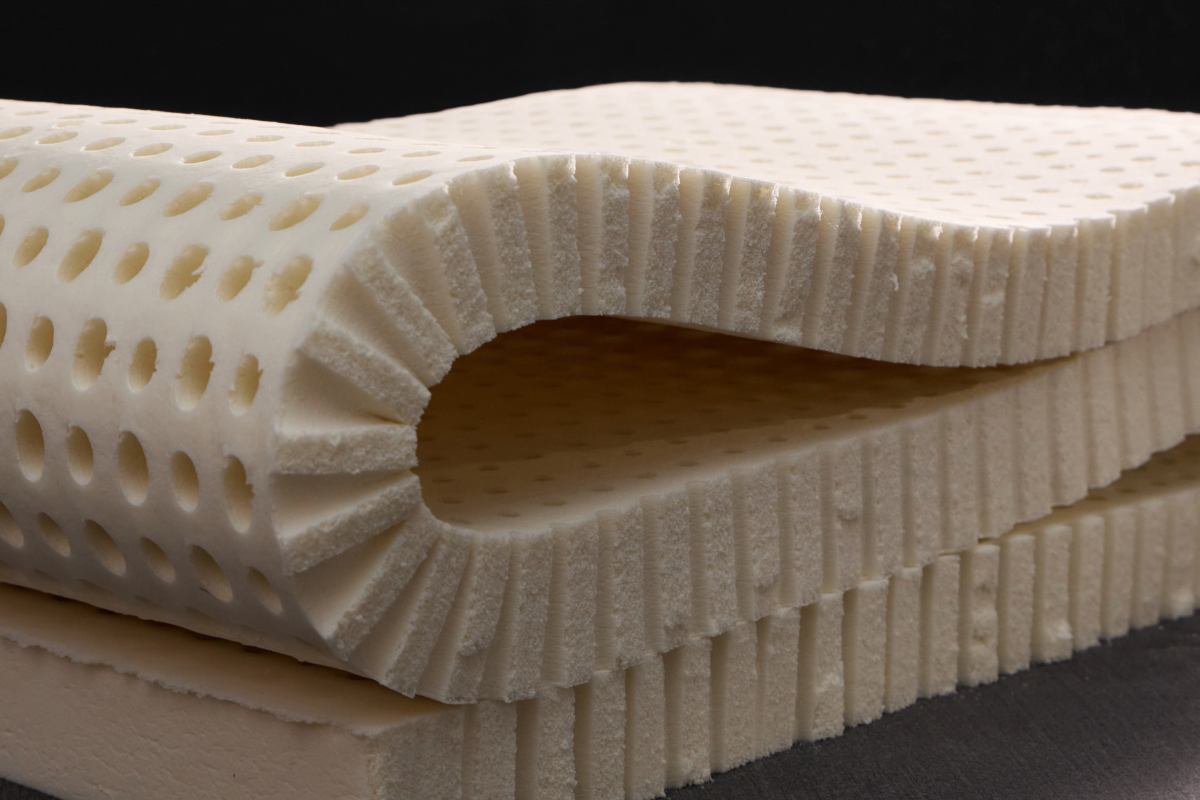
Natural latex
All three Ausbeds models use 5cm of GOLS-certified natural latex (95% organic).
Latex is open-cell. It breathes and responds. The open structure means it doesn't trap body heat the way polyfoam does – temperature regulation is just better. It also doesn't slowly compress and decompress the way memory foam does. It contours to your body and springs back immediately when you move. Memory foam contours and then holds you there, which is why people describe it like quicksand.
The durability of latex? It outlasts polyfoam by three to four times.
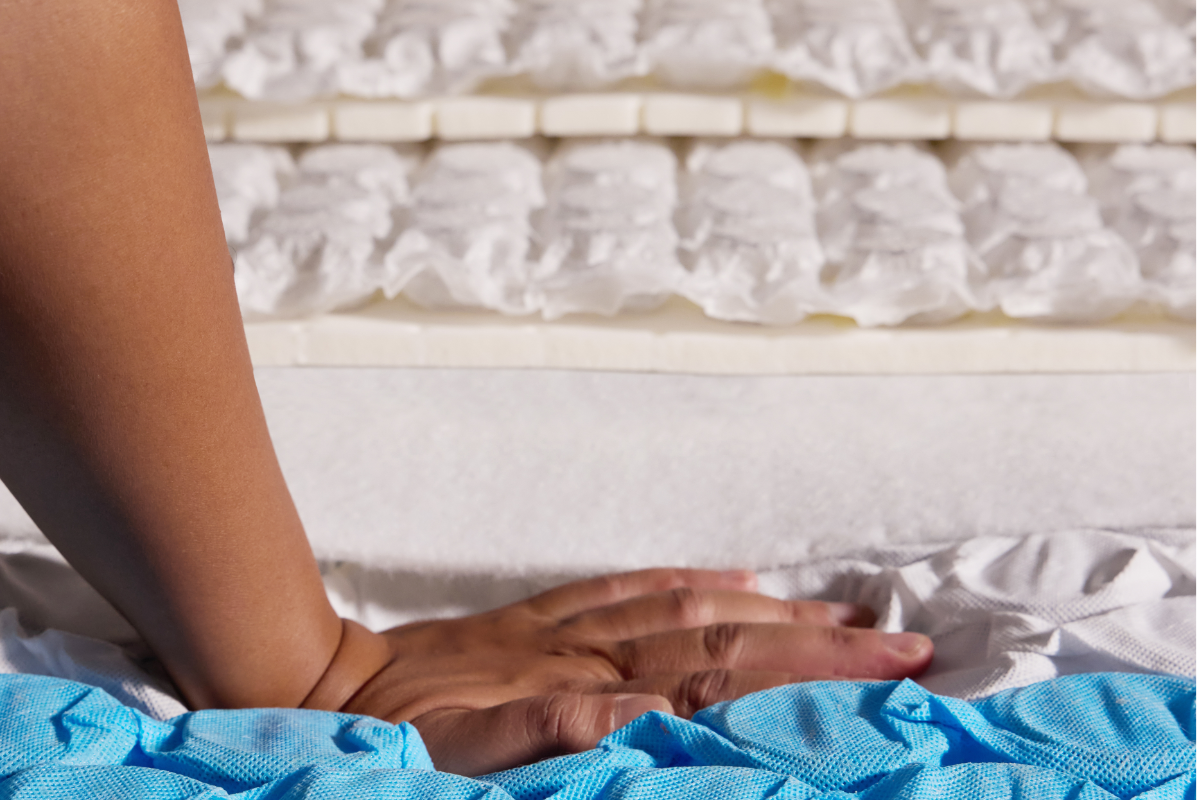
Honeycomb pocket springs
Standard pocket spring mattresses use approximately 768 springs arranged in rows. We use 986 springs per queen, arranged in a honeycomb pattern. The reason is simple: the honeycomb layout lets us fit more springs in the same space. More springs means more point elasticity. The surface wraps around your body with more fidelity. This is what the world's best mattress makers do. Hästens, Vispring, Savoir. All honeycomb, all single-zone.
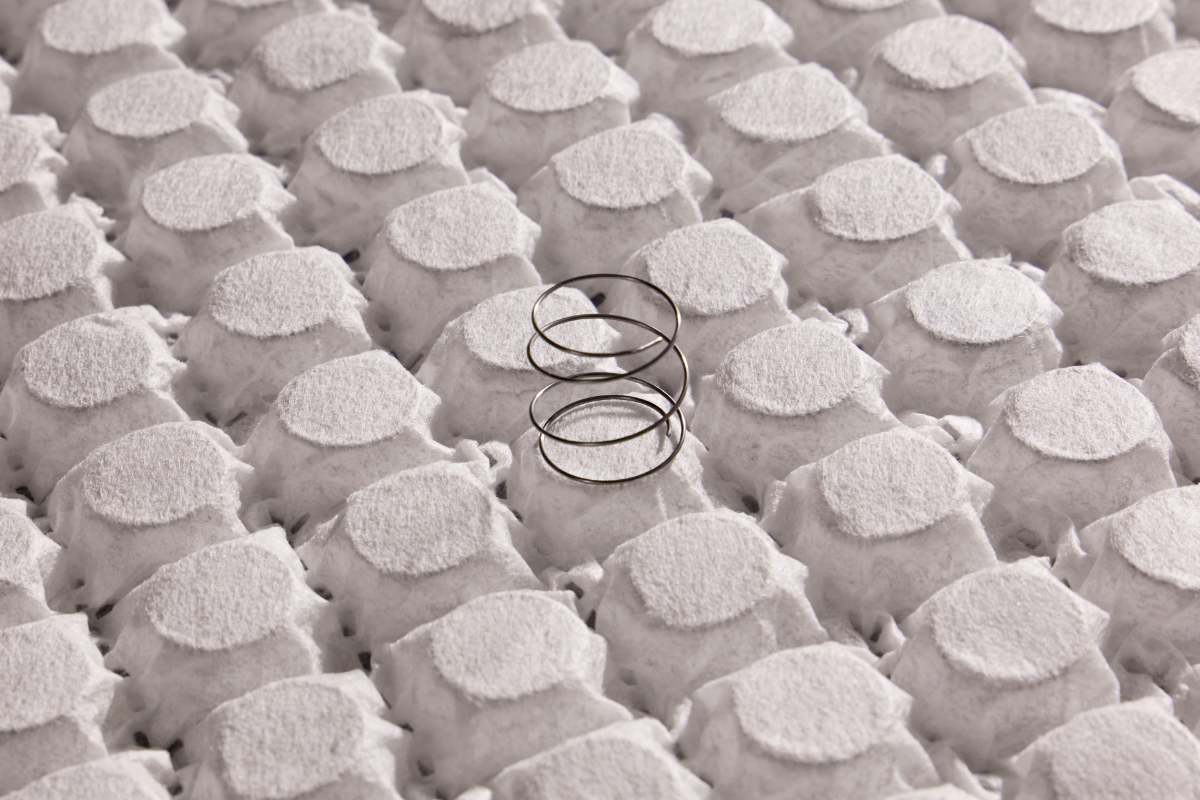
Micro springs
Our Aurora and Cloud models add one or two layers of micro springs above the main spring unit. These are small springs that cushion shoulders and hips before your body reaches the main springs.
This is why side sleepers tend to prefer the Cloud. The two micro spring layers (3200 springs) let your shoulders and hips sink in properly.
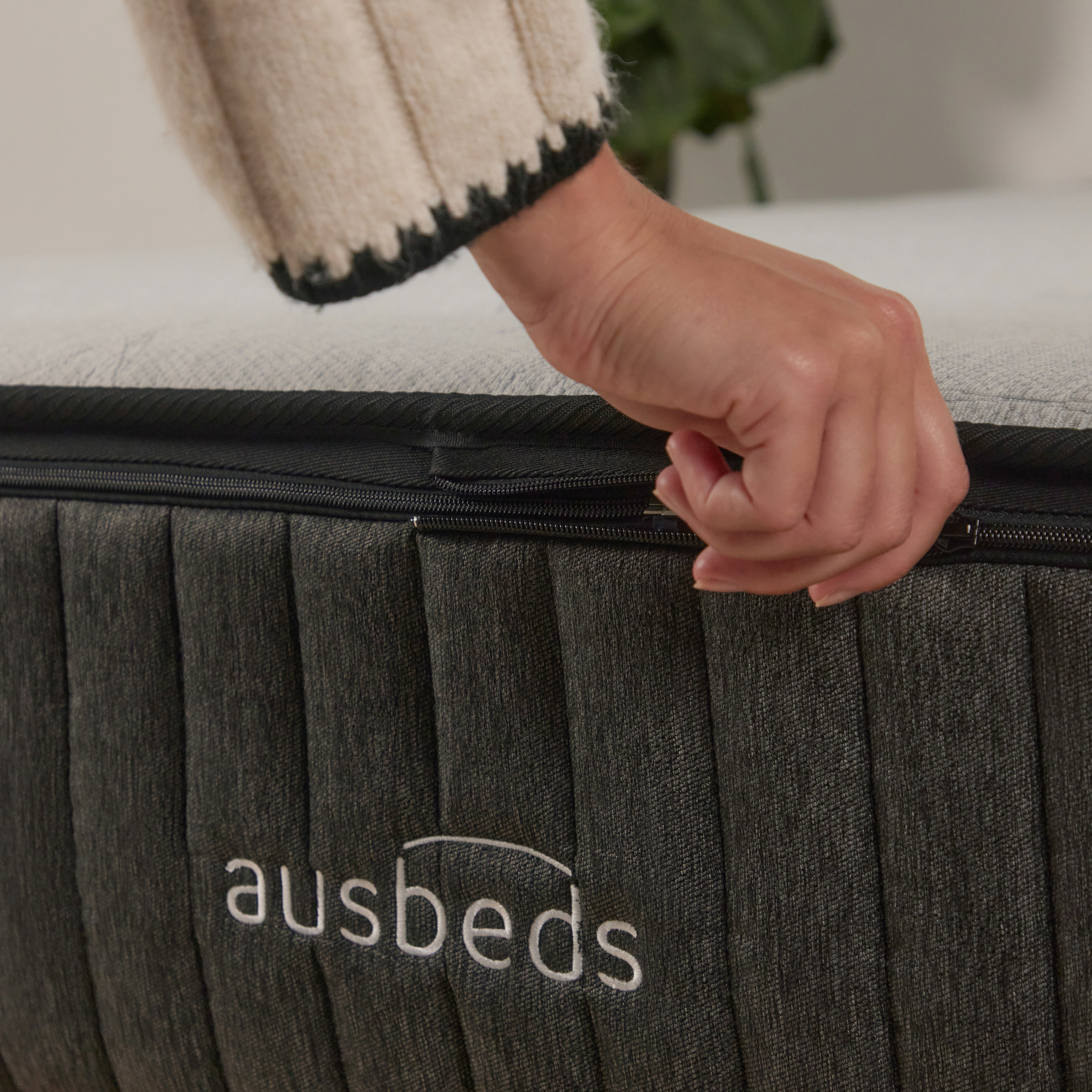
The cover
We use Tencel, an eucalyptus-based fabric, rather than polyester. The reason is practical: Tencel stretches. Our latex, micro springs, and pocket springs are all elastic. A rigid cover would negate that, creating what I call the drum effect – a taut surface that pushes back against your body instead of allowing it to sink in.
The cover is fully zippered. Components can be accessed, adjusted and even swapped.
Springs and latex matched to your body weight
Most mattresses come in soft, medium, or firm. The comfort layers may change, but the springs have a fixed firmness. A 55kg person and a 110kg person get the same springs and slightly different densities of foam on the top.
We match spring tension to your body weight. Lighter sleepers get softer springs. Heavier sleepers get firmer, supportive springs. The whole mattress responds correctly to your body. Getting this right is the foundation of everything else. You can put the best latex in the world on top of the wrong springs and still wake up in pain.
You can adjust it forever
Every Ausbeds mattress has three firmness levels built in that you can easily adjust at home. If you need to go significantly firmer or softer, we come to you and swap out the springs or latex.
During your 7-month trial, two component swaps are free. After the trial, you pay for the component only. If you want to purchase a single component later, no single part costs more than 25% of your mattress price.
A buy-for-life mattress
That's the goal. Not because the mattress is indestructible, but because when something needs replacing or when your body changes, you can purchase a single component, not a new bed.
Come and see for yourself
Our Gladesville showroom is a working factory. You can watch mattresses being made, try all three models at different firmness levels, and ask as many questions as you like. No commission-based salespeople. No pressure.
The bottom line
Are Sealy mattresses good? For a lot of people, they do the job. They are the most popular mattress brand in Australia.
But a decent mattress isn't the same as a great one. You're paying a premium for brand recognition, a deliberately confusing model lineup, and a retail system designed to prevent comparison shopping. At $1500 to $12000 for a new mattress, the materials inside are standard.
This comparison is based on information published by the brands themselves and other publicly available sources. Specs, prices and policies can change, so if you spot anything that looks wrong or out of date, let us know and we’ll check it.
Frequently asked questions
About the author

Karl is the owner of Ausbeds. He started the company after realising how many people were frustrated by mattresses that failed too soon and too often. So he built a workshop in Sydney and began making mattresses the way they should be made - with transparent materials, adjustable designs, and customer-first thinking. When he's not in the showroom/workshop, he's on Reddit, Whirlpool, and OzBargain, cutting through industry fluff with honest mattress advice.