Best Mattress for Back Sleepers
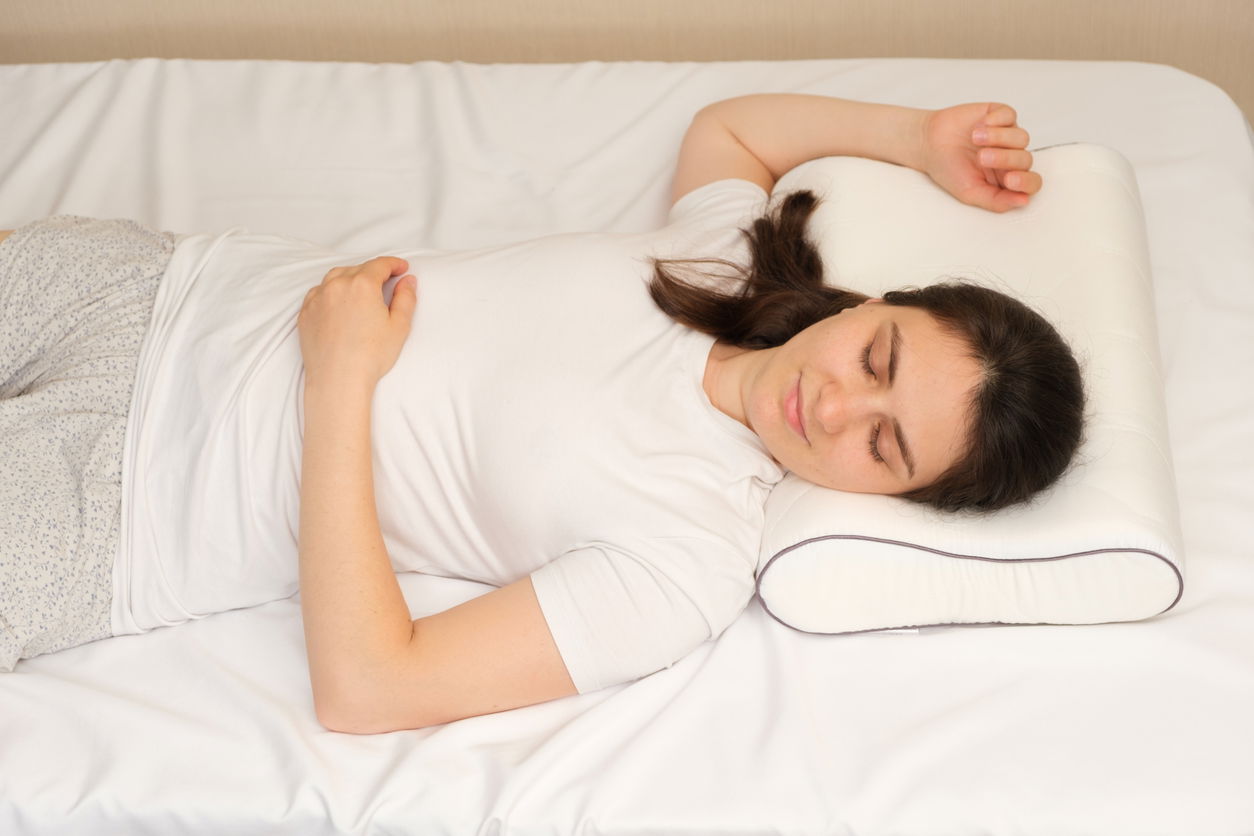
The truth about mattresses for back sleepers
When you're shopping for a mattress as a back sleeper, your body weight matters way more than the fact that you sleep on your back.
I know. Every article you've read says "best mattress for back sleepers" like it's a specific category of mattress. But here's what I've learned after 15 years of fitting thousands of people to mattresses: a 50kg back sleeper and a 120kg back sleeper need completely different mattresses. Meanwhile, an 80kg back sleeper and an 80kg side sleeper? They're actually pretty close.
The reason nobody talks about this is simple - it doesn't market very well. It's much easier to confuse people with marketing gimmicks than to explain simple mattress physics. If you want to avoid back pain and actually sleep well, you need to understand what's really happening when you sleep.
Back pain: why the wrong mattress hurts your back
When you sleep on your back, there are two very important things at play: gravity and your body weight.
If your springs are too soft for your weight, something bad happens. Your midsection (which is the heaviest part of your body) drops into the mattress more than your shoulders and legs. This creates what I call a hammocking effect - your body falls out of the middle of your range of motion.
Think about it: when you're standing, your spine has a natural curve. When you lie on your back on the right mattress, that curve should stay roughly the same. But when your stomach and hips sink too far into a too-soft mattress, your spine overextends. Your lower back arches backward, pushing your spine to the edges of its movement range. That's why people have bad sleep and wake up with sore backs.
Why back sleepers actually have it easier than side sleepers
Here's the good news: as a back sleeper, you've got it easier than side sleepers.
When someone sleeps on their side, they have these extreme pressure points - shoulders and hips stick way out. If the mattress is too firm, those pressure points take all the load, and you get circulation issues and pain. If it's too soft, they sink through the comfort layers and land on top of the springs (think of pushing your finger through a marshmallow onto a table - eventually your fingertip hurts because it's hitting the hard surface underneath).
But back sleepers? Your weight is distributed much more evenly across your body. No extreme pressure points to manage.
This doesn't mean any firm mattress will work. You still need the right spring tension for your body weight.
How we match springs to latex choice and body weight
First choose the surface feel: soft latex for a plush feel or medium latex for a balanced, responsive feel. We then use your latex choice and body weight to select the support underneath.
| Surface feel | Medium springs | Firm springs |
|---|---|---|
| Soft latex | Under 80kg | 80kg and over |
| Medium latex | Under 100kg | 100kg and over |
Soft springs are available by request for children and people under 50kg, but they are too soft for most adults. Contact us for a quote. If you weigh more than 130kg, contact us so we can check the complete setup.
Soft latex is only available with the Cloud’s 2 micro spring layers.
Firm latex is also available by request, but it is far too firm for most applications and can cause pressure pain. Firm springs with medium latex usually provide a better balance of firm support and cushioning.
What “firm enough” actually means
Here's where people get confused. They hear "firm support" and think "I need a rock-hard mattress." That's wrong.
For heavier people, I use firm springs, but I also make sure the top is well-padded. Heavier people will have a more challenging time with comfort because there is more weight to be distributed.
So I don't think saying "firmer is better if you are heavy" is accurate. I think it is more accurate to say, "firmer support is required so the body doesn't hammock." You can still put soft foams up the top to help with circulation and comfort.
The goal is this: the springs hold your body weight at the right level (preventing hammocking), while the comfort layers on top distribute pressure evenly so you don't feel the springs. If you get the spring tension right for the latex choice and body weight, the padding matters less.
Memory foam mattresses vs. hybrid mattress construction: what back sleepers actually need
Most mattress guides push memory foam mattresses hard, but here's what they don't tell you: memory foam doesn't fix a support problem. I've pulled apart hundreds of memory foam mattresses with dipping, and the issue is always the same - the foam layers compress unevenly under body weight.
A hybrid mattress (springs plus foam layers on top) gives you something better: independent support that adjusts to your weight through spring tension, with just enough foam on top so you don't feel the coils. When I see someone struggling on a traditional memory foam mattress, it's usually because the foam is too thick or the wrong density for their body weight.
For back sleepers specifically, you don't need the deep sink of gel memory foam or dense memory foam. You need proper support that keeps your lumbar region at the right height. That's why I use 5cm of natural latex in the current Aurora and Cloud - just enough cushioning without storing heat or creating that quicksand feeling.
Quality materials: why they matter more than brand names
Most mattress marketing talks about "premium materials" without explaining what that means or why it matters to your sleep. Here's the truth: materials determine how long your mattress lasts and whether your body gets the support it needs.
Both current Ausbeds models, Aurora and Cloud, use the same core support system that took us years to refine:
Honeycomb Pocket Springs: 986 coils for Queen, 1,160 for King (pocketed coils, not innerspring coils, which are cheaper cage springs). We arrange them in a honeycomb pattern instead of rows because we can fit 30% more springs in the same space. More springs means better weight distribution and less pressure on your hips and shoulders. These aren't generic springs. We source them with 6-7 turns (versus the industry standard 5) for optimal pressure relief and better edge support.
I once ran out of springs and rang someone to use his pocket springs. It turned out there were only 600 pocket springs in the unit. I got so many returns after that. That's when I realised that if I was getting more returns from having fewer turns and fewer springs, maybe if I increased the turns and the springs, I would get even fewer returns. So I looked at Vispring, which has been operating for 90 years... They used higher coil counts and six turns.
Natural latex: Our natural latex comes from 323 certified organic farms in Sri Lanka. It lasts 3-4 times longer than petroleum-based foam and doesn't retain heat the way memory foam does. Density: 70 kg/m³, traceable to specific rubber tree forests. Natural latex mattresses cost more upfront, but you're not replacing them in five years like most foam mattresses.
Micro springs: Queen size gets 1,600 micro coils, King gets 1,800. These sit above the main springs to give you contouring without the "stuck in quicksand" feeling of memory foam. Cloud uses double layers (3,200 for Queen / 3,600 for King) for maximum pressure relief.
As one customer put it: "This is the way to go. Excellent bed, that uses excellent materials. Price is comparable to other thousand dollar beds, but is customisable before and after delivery. I got the Aurora with half/half different sides and could not be happier. I had lower lumbar issues on old mattress and this has helped considerably." - PBz, Aurora Queen.
Different sleeping positions: why combination sleepers and hot sleepers still need the right springs
If you're a combination sleeper (back and side), the same fitting process applies: choose the latex surface feel, use body weight to select the spring support, then use sleep position to choose the cushioning. I've had combination sleepers do fine on the same spring unit that works for dedicated back sleepers at the same weight.
For hot sleepers, here's what I've learned: thickness of foam matters more than "gel infused memory foam" or any cooling mattress marketing. A thick memory foam layer stores body heat like a frying pan - the thicker the pan, the more heat it holds. That's why I use thinner latex foam or minimal polyfoam on top of springs, so air can move and heat doesn't get trapped.
The bottom line for back sleepers
If you're a back sleeper looking for the best mattress, stop searching for "mattresses for back sleepers" and start looking at your body weight:
-
Find your weight bracket - Choose soft or medium latex, then use our recommendation table above
-
Match spring tension to your latex choice and weight - This prevents hammocking and keeps your spine in a neutral position for spinal alignment
-
Choose the cushioning for your sleep position - As a back sleeper, you need less contouring than side sleepers (no extreme pressure points to manage)
-
Avoid springs that are too soft - The midsection drop will overarch your back all night
-
Don't assume "firm is better" - You need the correct support for your latex choice and weight, with appropriate comfort layers on top (not a soft mattress, not a medium mattress, but the right mattress for your weight)
I've seen it thousands of times: someone comes in asking for a "firm mattress for back sleepers" when they weigh 65kg. Medium springs are the standard recommendation at that weight. Or someone weighing 115kg buys a "medium firm mattress for back sleepers" and wonders why their back hurts. They're hammocking all night.
Latex choice and body weight set the support starting point; sleep position then helps choose the cushioning.
Get the spring tension right for your latex choice and body weight, and as a back sleeper, you'll have a much easier time than side sleepers finding something comfortable. Your weight distribution is more even, you don't have extreme pressure points, and you've got more flexibility in what works (you have a better chance on different mattress types than side sleepers do). But get the spring tension wrong, and no amount of "back sleeper optimised" marketing will save you from a sore back.
And because we build every Ausbeds mattress with a flippable spring unit (flip it to adjust mattress firmness by ~10-15%), removable felt layers, replaceable comfort layers, and swappable spring units, you're never stuck with the wrong firmness. We include 2 free firmness swaps during the 7-month trial, and you can adjust or upgrade components for life. No single component costs more than 25% of your mattress price. Delivery is $2/km in Sydney and from $190 interstate (Melbourne, Brisbane, Canberra). Use the delivery calculator to check your exact cost.
I fit them to something that I feel is keeping the spine aligned, with no pressure points. A firm mattress will often do the opposite. Having the spine at the edges of its movement range is why people have bad sleep.
All just my opinion, of course.
Frequently Asked Questions
About the author

Karl is the owner of Ausbeds. He started the company after realising how many people were frustrated by mattresses that failed too soon and too often. So he built a workshop in Sydney and began making mattresses the way they should be made - with transparent materials, adjustable designs, and customer-first thinking. When he's not in the showroom/workshop, he's on Reddit, Whirlpool, and OzBargain, cutting through industry fluff with honest mattress advice.