Bed Base Types: Which Ones to Avoid
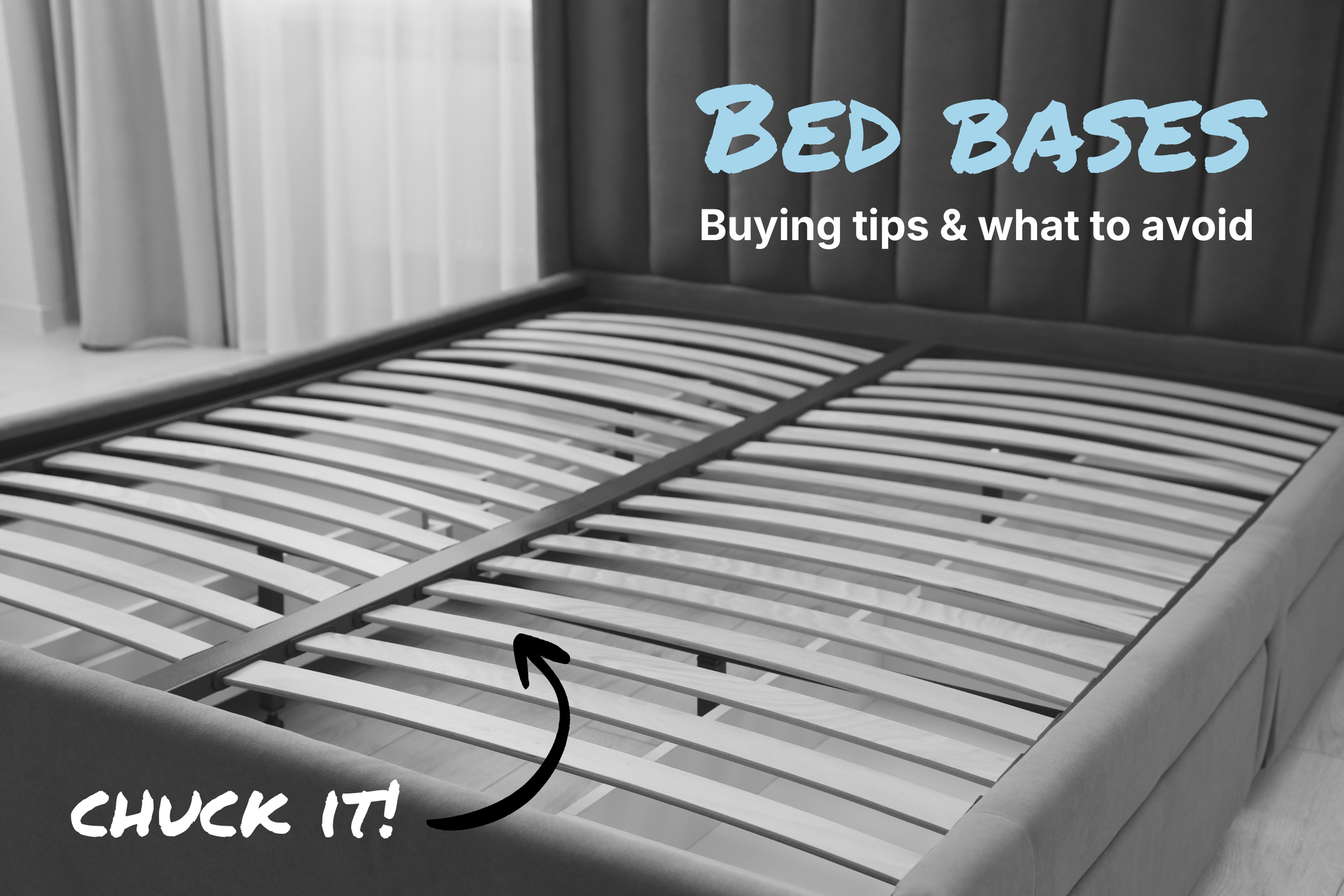
Why your bed base matters more than you think
A mattress moulds to whatever sits underneath it. Put it on a dead flat surface, and it performs as designed. Put it on a base with bendy slats and gaps, and it'll sag, bulge, and create pressure points that wreck your sleep quality.
Pocket spring mattresses are especially vulnerable because each spring acts independently. Put one over a gap in the slats, and those individual springs just drop into the hole. A Bonnell spring mattress, like your typical Sealy, will bridge the gap a little better because the springs are all wired together, but it'll still wear unevenly over time.
The ideal foundation for any mattress is a dead flat concrete slab. You're obviously not sleeping on concrete, but the closer your bed base gets to that – flat, rigid, no flex – the better your mattress will perform and the longer it'll last. When you're buying a bed base, you're only as strong as the weakest link.
The worst bed bases we've seen online
If your bed base looks like any of these, put your mattress on the floor right now and chuck the base.
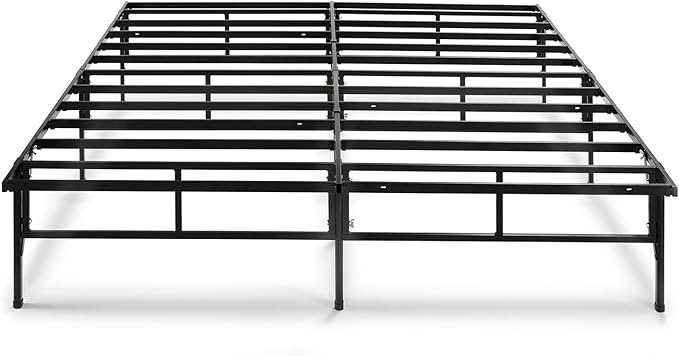
Budget metal platform frames. These thin Zinus bed frames have metal bars spaced 15–20 cm apart. Your mattress literally bulges through the gaps. Pocket spring mattresses are the worst on these – individual springs have nothing to push against between bars. These are honestly shocking!

Flexible "posture" slats. Those curved engineered wood slats that bow upward. They are incredibly weak and bend under bodyweight. They're cheap to make, cheap to ship, and terrible for your mattress and back.
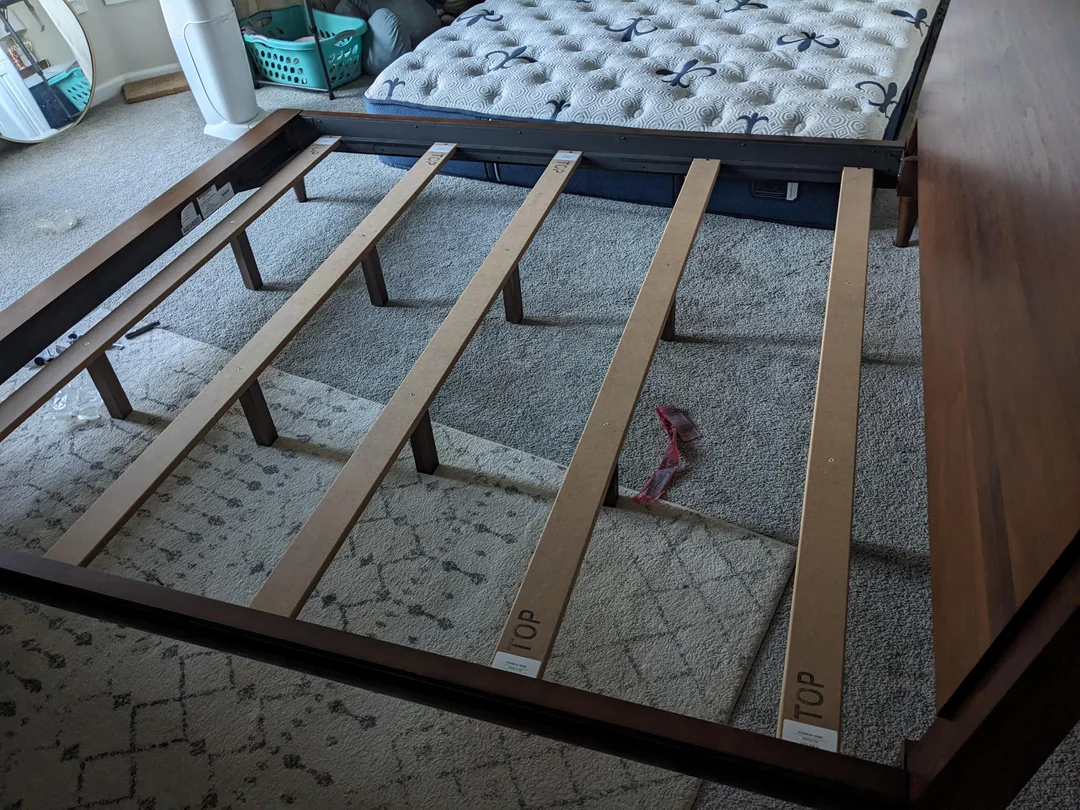
Like the Zinus frame, this one has the same problem – slats spaced so far apart that the mattress has more gap than support. You can see the mattress already sagging between the bars at the head end. That's a pocket spring mattress too, which makes it worse – every unsupported spring is just dropping into thin air.
Other bed bases to avoid
Cheap storage bases with drawers. On budget models, the drawer cavities eat into the structural area right under your hips and lower back. The mattress has nothing solid to sit on where it matters most.
Adjustable bases with thin plywood. Some adjustable electric beds use thin plywood panels that will not stand the test of time. Same sagging problem, just with a motor attached.
The main types of bed bases explained
Here's a quick comparison of the styles you'll find on the market. I'll go deeper on each one below.
| Type of bed base | Surface | Watch out for |
|---|---|---|
| Slatted base (rigid pine) | Solid pine slats, 8–10 cm apart | Knot quality in cheaper versions. "Clear pine" is preferable (no knots). |
| Slatted base (flexible/posture) | Bent engineered wood | Sags, creates hump, ruins mattress, hurts your back. |
| Platform bed frame (metal) | Metal bars or mesh | Wide bar spacing, mattress bulge |
| Ensemble base / divan base | Solid fabric-covered platform | Some use springs instead of a solid top – avoid those. Drawer versions can also be weak. |
| Adjustable base (electric bed) | Plywood or slats | Thin plywood can be a weak platform. |
| Solid timber bed frame | Timber frame + rigid slats | Check that the slats are close together and that the wood is solid. |
How to tell if your bed base is the problem
The finger press test. Press the centre of each slat down with your hand. If it bends under finger pressure, it'll flex far more under your full bodyweight. Rigid slats shouldn't move at all.
The floor test. Slide the mattress off the base and onto the floor. Sleep on it for a night. If your back feels better, the base is the problem – not the mattress.
What you can do to fix it
1. Temporary fix: add plywood. Cut a sheet of 4 mm+ plywood to sit across the base, especially under the hip and shoulder zones – that's where most of the damage happens. You can get plywood cut to size at Bunnings or a timber warehouse. Just make sure the wood is thick enough that it doesn't flex, and get exact measurements before you go – otherwise it's an expensive lesson.
2. Replace the slats. Swap out flexible slats for solid pine. Clear pine without knots is the best – knots are weak points that snap under load. Aim for slats spaced no more than 8–10 cm apart.
3. Buy a new base. If the frame itself is twisted, wobbly, or the slats are beyond saving, start fresh. An ensemble base with a solid top or a timber frame with rigid slats are the two best options.
List of good bed bases
- Quokka Beds make quality frames out of solid timber – the lead time is 10–12 weeks, but it could be worth the wait
- The Acacia Tree bed frames also look good. A bit more expensive than Quokka, though.
- Our Ausbeds bed base is affordable and no-fuss, made from solid pine. It's nothing flashy but gets the job done.
What to look for when buying a bed base
Most of the problems I see come down to people not checking the right things before they buy. The bed frame might be cheap, or look great in the showroom, but it's what the mattress sits on that matters. Here's what to check:
- Press the slats. If they flex under finger pressure, walk away. Rigid slats only.
- Check the spacing. Slats should be no more than 8–10 cm apart.
- Ask what the slats are made from. Solid pine or thick plywood is what you want. If the sales staff can't tell you, that's a red flag.
- Count the parts. The fewer components, the fewer things that can fail. A simple solid base will outlast a complicated one with mechanisms, hinges and moving pieces.
- Ignore the marketing. Focus on quality materials and whether the surface is flat and rigid.
- Check the centre rail. On a queen or king frame, the centre rail needs to be sturdy and level. If it's flimsy, every slat that spans across it becomes a weak point.
- Think about your mattress type. Pocket spring mattresses need tighter slat spacing than foam because individual springs drop into gaps. If you're running a pocket spring, tighter spacing or a solid surface is a must.
What we do at Ausbeds
If you're in Sydney and ordering a mattress from us, let us know if you think your slats might be flexible – we can supply 4 mm plywood cut to size with your delivery. It's a band-aid, not a long-term fix. We'll tell you straight to replace the base within 6–12 months. But it protects your new mattress in the meantime. Call the Marrickville showroom to organise it.
People also ask
About the author

Karl is the owner of Ausbeds. He started the company after realising how many people were frustrated by mattresses that failed too soon and too often. So he built a workshop in Sydney and began making mattresses the way they should be made - with transparent materials, adjustable designs, and customer-first thinking. When he's not in the showroom/workshop, he's on Reddit, Whirlpool, and OzBargain, cutting through industry fluff with honest mattress advice.